If the hardwood in front of your slider is two shades lighter than the wood under the rug, the sun did it, and a window treatment can slow that down a great deal. But it can only stop fading completely when it blocks light completely, which is why the honest answer depends on whether you want to keep seeing out that window.
What actually fades your floors, and why it isn't only UV
Fading is a chemical reaction. Light energy breaks down the dyes, stains and finishes in whatever it lands on. Three things drive it, and they get lumped together as "UV damage" when only one of them is UV.
- Ultraviolet light. The most energetic part of sunlight and the fastest at breaking down dyes. It's also the part modern dual-pane low-E glass already cuts substantially on its own.
- Visible light. The part you can see. It fades things more slowly than UV, but there is vastly more of it coming through your window, and it's the reason a room with UV-filtering film still fades. Any product that lets you see out is letting visible light in.
- Heat and humidity swings. Warm surfaces accelerate the reaction, and repeated heating and cooling opens up finishes and dries out leather and wood. This is why the same red oak fades faster in a hot west-facing room in Woodland Hills than in a cool north bedroom.
That breakdown matters because it kills the most common sales claim in this industry. A fabric that filters UV does not make a room fade-proof. It removes the worst offender and leaves the abundant one. Anyone quoting you a single protection percentage is quoting a lab test on one variable, not what will happen to your walnut floor over five summers.
The other thing worth knowing before you spend money: some materials are simply doomed near glass. Cherry and walnut floors shift color noticeably no matter what. Natural-dye wool and silk rugs, unlined linen upholstery, watercolors and photographs on paper, and inkjet prints are all fast faders. Engineered floors with a UV-cured aluminum-oxide finish, solution-dyed acrylic outdoor fabric, and most synthetics hold up far better. Half of a fading complaint is the finish on the item, not the window.
In San Fernando Valley? Get a free quote from a local installer
Send us your window sizes and a few photos and we'll quote you, usually the same day. Want us to come out with samples and measure? The consultation is free. Call or text us three days and times that work.
Serving Calabasas, Hidden Hills, Woodland Hills, Encino, Tarzana and nearby.
Which windows in a Valley house actually do the damage
In the San Fernando and Conejo Valleys the pattern is consistent enough that we can usually guess which rooms are affected before we walk in.
West and southwest glass is the problem. From roughly 3pm until sunset the sun is low, coming in nearly horizontal, and reaching deep into the room instead of stopping at the sill. That's the afternoon that bleaches the first four to eight feet of floor inside a slider in Encino, Tarzana or Northridge.
South glass does slower, wider damage. High summer sun hits mostly the sill and the first foot or two of floor. But in December, when the sun sits low all day, south windows throw light across the whole room for hours. South-facing fading tends to be even and gradual rather than a sharp line.
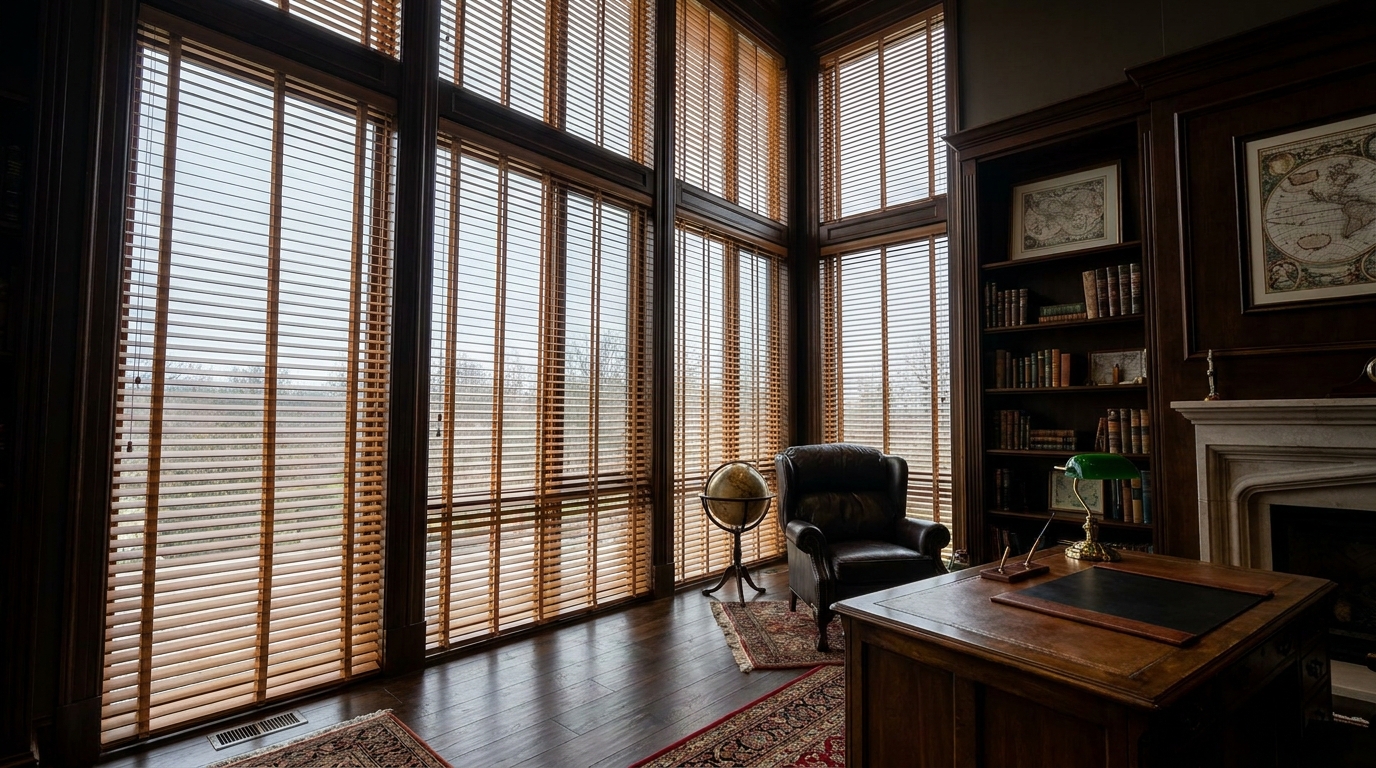
Skylights and clerestory windows in two-story great rooms are quietly brutal. The gated hillside tracts — The Oaks in Calabasas, Hidden Hills, Bell Canyon, the Porter Ranch hillside streets — are full of 18-foot view walls and upper windows nobody ever covers because nobody can reach them. That's often where the art and the stair-hall runner are fading.
Older wide, low windows compound it. The 1950s–70s ranch and mid-century housing stock through Sherman Oaks, Studio City, Toluca Lake, North Hollywood, Burbank, Chatsworth and Granada Hills often has original or early-retrofit glass with no low-E coating. Two neighbors with identical elevations can fade at very different rates purely because one re-glazed and one didn't.
North-facing windows fade things too, just far more slowly. If a client is trying to prioritize a budget across twenty openings, the west and southwest glass gets the protective product and the north side gets whatever they like the look of.
What each product actually does about it
Blackout and room-darkening fabrics do the most. An opaque roller or cellular shade with a blackout liner, pulled down, stops essentially all the light that would reach your floor. This is the only category that genuinely arrests fading, and the catch is obvious: you're living in a dark room. It works beautifully in bedrooms, media rooms and a guest room nobody sits in at 4pm. It's a poor answer for a room you bought for the view.
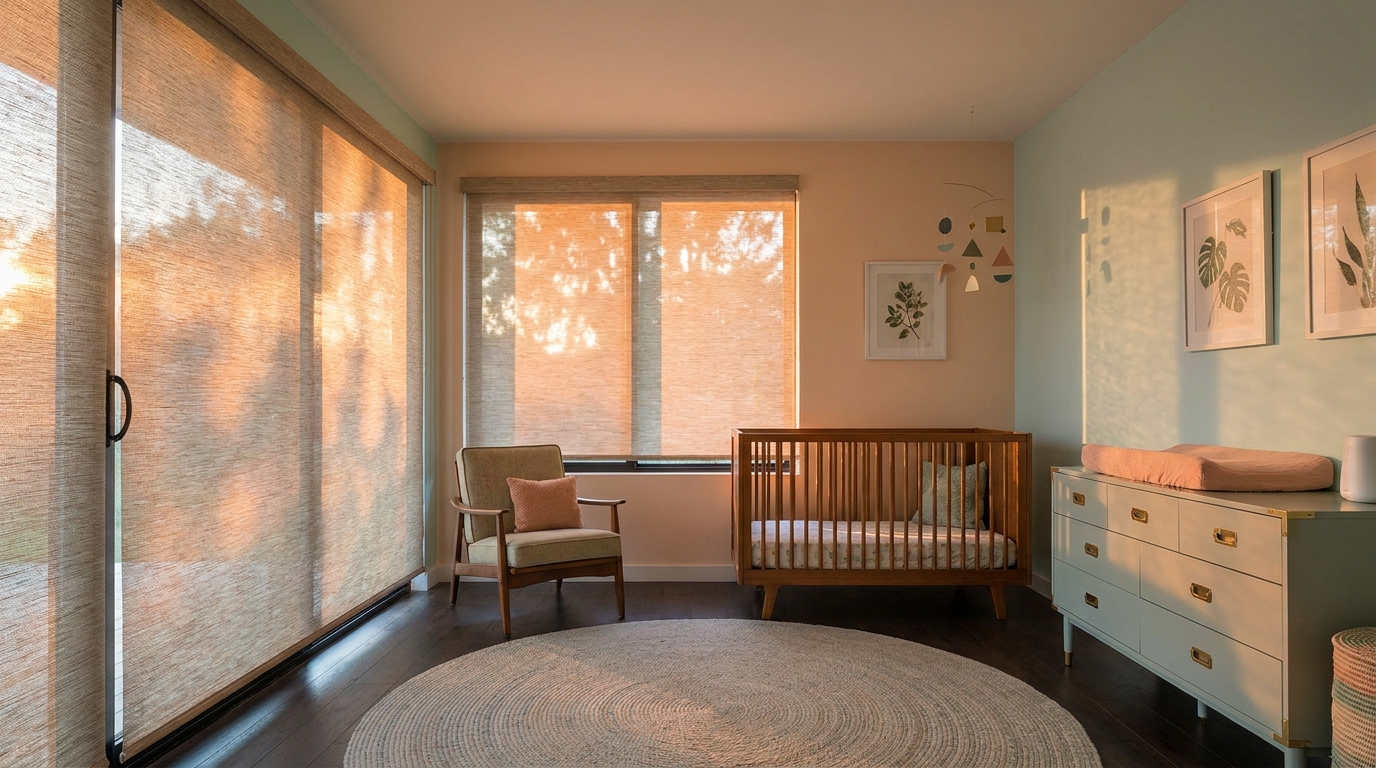
Solar screen shades are the practical middle. A tight-weave solar shade cuts UV, cuts a large share of visible light and glare, and still lets you see the yard. Fading slows dramatically but does not stop. For a family room slider in Agoura Hills that stays open all afternoon, this is usually the right trade.
Shutters work, but only closed. A closed hardwood or composite louver panel is an opaque barrier — as protective as a blackout shade. Tilted, which is how almost everyone actually lives with shutters, louvers angled down aim sunlight straight onto your floor. It's a great product for privacy on close lots and for durability; it is not fade protection unless somebody closes it. We wrote more about that trade-off in our piece on shutters and summer heat.
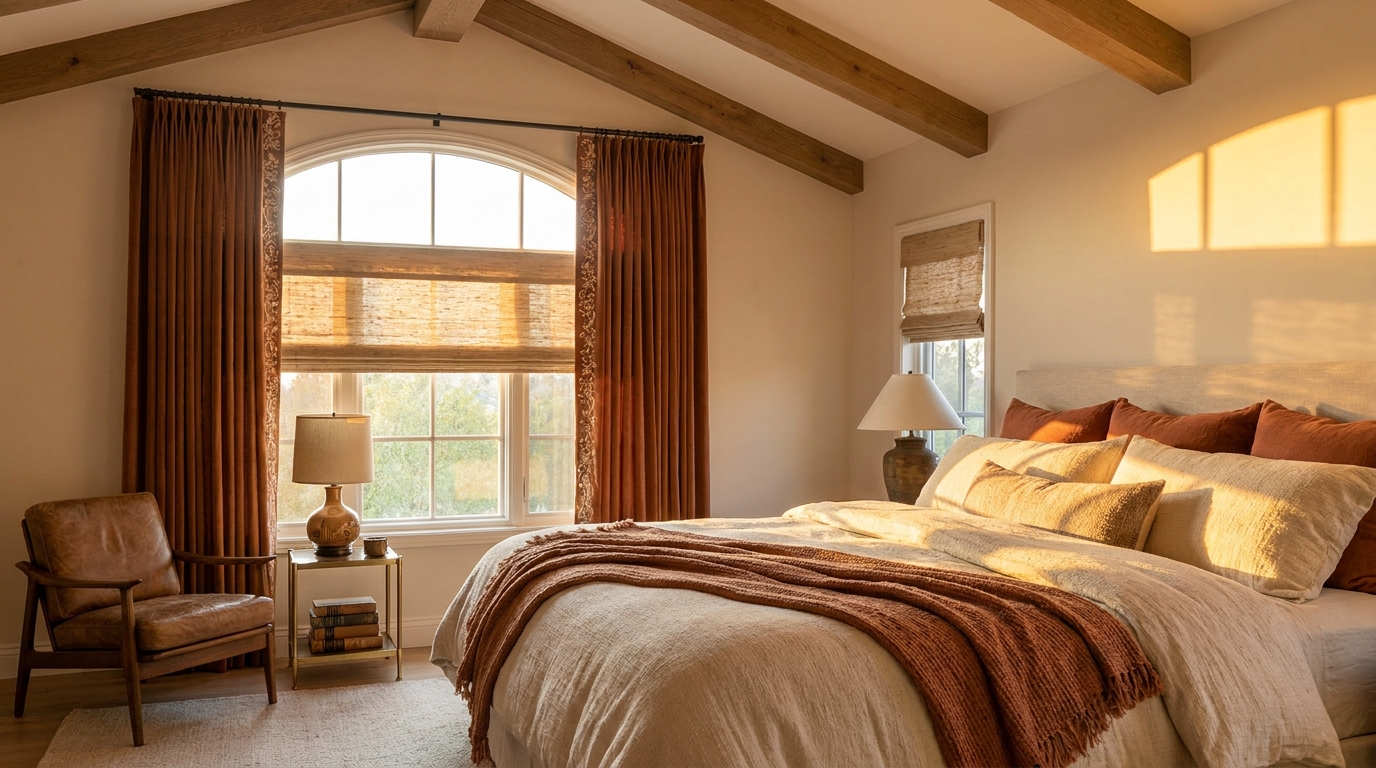
Lined and interlined drapery is underrated here. A blackout or dim-out lining plus interlining gives you a thick, opaque barrier, and drapery has the advantage of covering the glass edge-to-edge and stacking off to the side when you want the window back. In a formal living room with a valuable rug, drapes you close on summer afternoons will outperform anything mounted inside the frame.
Woven woods and light-filtering cellulars are a partial answer. Woven wood shades have visible gaps between the reeds and pass streaks of direct sun. They look wonderful and they are not a fade strategy on west glass unless you add a liner. Light-filtering cellular diffuses light well but still transmits plenty of it.
Openness factor, in plain English
Solar shade fabric is specified by openness — the percentage of the weave that's actually holes. It's the single number that determines whether you're protecting the room or looking at the view, and it's the thing most quotes never explain.
| Openness | What you get | Where it belongs |
|---|---|---|
| 1–3% | Very tight weave. Strong glare and light control, view reduced to a dim silhouette during the day. | West-facing rooms with valuable floors or art; home offices with screen glare |
| 5% | The common compromise. Real reduction in light and heat, view still readable. | Most family room and living room sliders |
| 10% | Open weave. Clear view out, modest protection. | North and east windows, or view walls where the view is the point |
| 14%+ | Mostly a glare and privacy screen. Limited fade benefit. | Covered patios, shaded exposures |
Two more things affect how a solar shade performs: the fabric color and how tightly it fits the opening. A light or white-backed fabric reflects more energy back out the glass; a dark fabric absorbs it, gives you a crisper view, and then re-radiates some warmth into the room. And light spilling around the edges of a shade lands on your floor just the same, which is why an outside mount or a side-channel system protects better than a narrow inside mount.
Window film is a different product, and the two stack
Window film is applied to the glass itself by a film installer, not a window treatment company. Good spectrally-selective film cuts UV and a meaningful share of solar heat while staying close to clear, which is exactly what an interior shade can't do — because a shade protects nothing when it's up, and film works every hour of every day whether anyone is home or not.
What film doesn't do is control glare, give you privacy at night, or block the visible light that does the slow fading. That's the shade's job. For a great room with a two-story view wall you can't practically cover, film on the upper glass plus a solar shade on the reachable lower glass is a genuinely good combination, and we'll say so even though we don't sell the film. If your house is under an HOA in Hidden Hills or The Oaks in Calabasas, check the rules before you film — reflective films often need approval.
How it is priced, and where to spend it
Roller, solar, zebra and cellular shades are priced per window, and they cover most of the fade-protection work in a Valley house. Plantation shutters are priced by the square foot, with a 12-square-foot minimum billable per opening. Custom drapery with real lining and interlining is priced per window. Motorization is added per shade, and it's worth considering on the windows that matter most for fading — a shade that closes on a schedule at 3pm is a shade that's actually doing its job on the days you're not home. Every home is different, so we give a free written quote from your window sizes or photos. Request yours here.
The sensible order of spending: west and southwest glass first, then skylights and high clerestory windows, then south glass, then everything else for looks and privacy.
When you're ready for real numbers on your own windows, book an in-home visit. Someone comes out, measures every window, brings real samples you can hold against your floor and your sofa in the actual afternoon light, and you get a firm quote with installation included. The in-home consultation is free. If you already have a quote from someone else and want to know whether the fabric specs match what you were told, you can upload it to our free Quote Check tool.
Frequently asked questions
Can any window treatment stop sun fading completely?
Only one that blocks light completely. A closed blackout roller or cellular shade, a closed shutter panel, or blackout-lined drapery pulled shut will effectively stop fading on that window, because nothing reaches the floor. Anything you can see through is passing visible light, and visible light fades things — more slowly than UV, but there is far more of it.
What openness factor should I choose for a west-facing slider?
For a west or southwest window where you're worried about fading, a 1–3% openness solar fabric gives the strongest light and glare control while still showing a dim outline of the outside. A 5% is the usual compromise if the view matters. A 10% or higher weave looks great and protects much less. Fabric color and how tightly the shade fits the opening also change the result.
Do I need window film if I'm getting solar shades?
They do different jobs, and they stack well. Film is applied to the glass by a film installer and works every hour of the day whether anyone is home or not, which helps on high clerestory or two-story view-wall glass you can't reach. Shades control glare, privacy and the visible light that causes slow fading. If you have big uncoverable glass, doing both is reasonable. Check HOA rules in gated communities before filming.
Which windows in a San Fernando Valley house fade things fastest?
West and southwest glass, because late afternoon sun comes in low and reaches deep into the room. South glass does slower, more even damage, and it's worst in winter when the sun stays low all day. Skylights and upper clerestory windows in two-story great rooms cause a lot of unnoticed damage because they're rarely covered. Older windows without a low-E coating fade rooms faster than newer retrofits.
How are fade-reducing shades priced?
Roller, solar, zebra and cellular shades and lined custom drapery are priced per window. Plantation shutters are priced by the square foot with a 12-square-foot minimum per opening. Motorization is added per shade, which is worth it on the windows you want closing automatically in the afternoon. We give a free written quote from your window sizes or photos.
In San Fernando Valley? Get a free quote from a local installer
Serving Calabasas, Hidden Hills, Woodland Hills, Encino, Tarzana and nearby.
- Quote from your window sizes and photos, usually the same day
- See real samples in your space
- We carry every major manufacturer