Yes, window treatments will slow that stripe down, and no, nothing you hang on the inside of the glass stops fading completely unless it blocks the light entirely and stays down. The realistic goal for a room you actually live in is to cut the dose — fewer hours of direct sun on the floor, and a denser fabric during the worst part of the day — not to preserve the wood forever.
What is actually bleaching the floor in front of a Conejo Valley slider
The pale band almost always lines up with the path of the sun across a west or southwest opening. In the tract plans we see all over Thousand Oaks, Newbury Park, Moorpark and Simi Valley — built roughly between the mid-1980s and the mid-2000s — that opening is usually a six- or eight-foot slider off the family room, with no deep eave above it, and a floor that gets hit hard from about 3pm until sunset.
Three parts of sunlight do the damage, and they do not respond to the same fix.
- Ultraviolet. The highest-energy portion. It breaks down finishes, dyes and fibers fastest, and it is the part most fabrics and films target.
- Visible light. The part you can see. It fades things more slowly than UV but there is far more of it, and it accounts for a large share of real-world fading. This is the reason a product that handles UV well can still leave you with a lighter floor after two summers.
- Heat. Infrared does not bleach color directly, but heat accelerates the chemistry, and it also dries and checks wood, leather and finishes.
That is the honest reason we do not quote UV-blocking percentages at homeowners. A number that describes one slice of the spectrum tells you almost nothing about what your hickory floor or your wool rug will look like in three years.
Orientation decides who has this problem. West and southwest glass is the worst here — the Simi hills and Wood Ranch and Big Sky elevations, the view walls in North Ranch and Lake Sherwood, the back-of-house sliders in Dos Vientos and Spanish Hills. South-facing glass fades things year-round but at a lower daily peak. North-facing rooms fade slowly, mostly from bounced light. East glass gets a hot morning and then relaxes.
Two more local factors. Coastal Ventura, Oxnard and parts of Camarillo get real marine layer through late spring, which cuts morning exposure; inland Conejo and Simi do not, and they get long, clear, high-UV afternoons from May through October. And Santa Ana dust settles on everything, which matters later when we talk about cleaning.
In Ventura County? Get a free quote from a local installer
Send us your window sizes and a few photos and we'll quote you, usually the same day. Want us to come out with samples and measure? The consultation is free. Call or text us three days and times that work.
Serving Thousand Oaks, Newbury Park, Westlake Village, Oak Park, Simi Valley and nearby.
What each treatment actually does about fading
Ranked by how much light they keep off your floor, not by price.
Blackout and room-darkening fabrics. An opaque roller or cellular shade, fully down, is the only interior product that essentially ends the exposure while it is closed. It is also the product nobody keeps closed in a family room. This is why blackout wins in bedrooms, media rooms, and rooms with art — places where you already want the shade down.
Plantation shutters, closed. A closed louver is an opaque barrier, and shutters have the practical advantage that people do close them at 4pm because of glare. Tilted, though, they aim a band of sun straight at the floor, and a low western sun shines right down the barrel of the louver. Shutters are excellent at protecting the room when they are shut and mediocre when they are at 45 degrees.
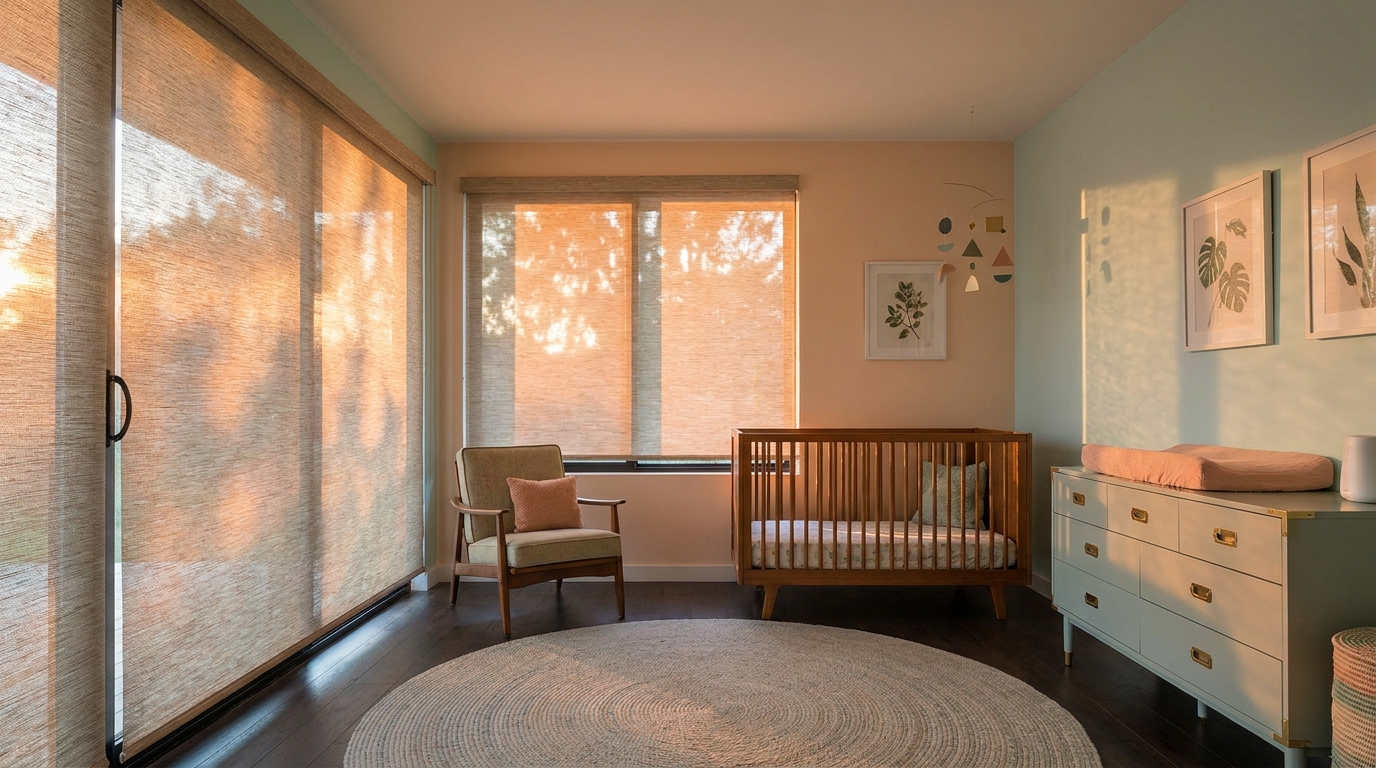
Tight-weave solar shades. These are the compromise most people actually keep in use. A dense screen fabric takes out most of the direct beam while leaving a dim view of the yard. You give up some clarity and you never get to zero, but a shade that stays down from 3pm to sunset every day does more real good than a blackout shade someone stops using.
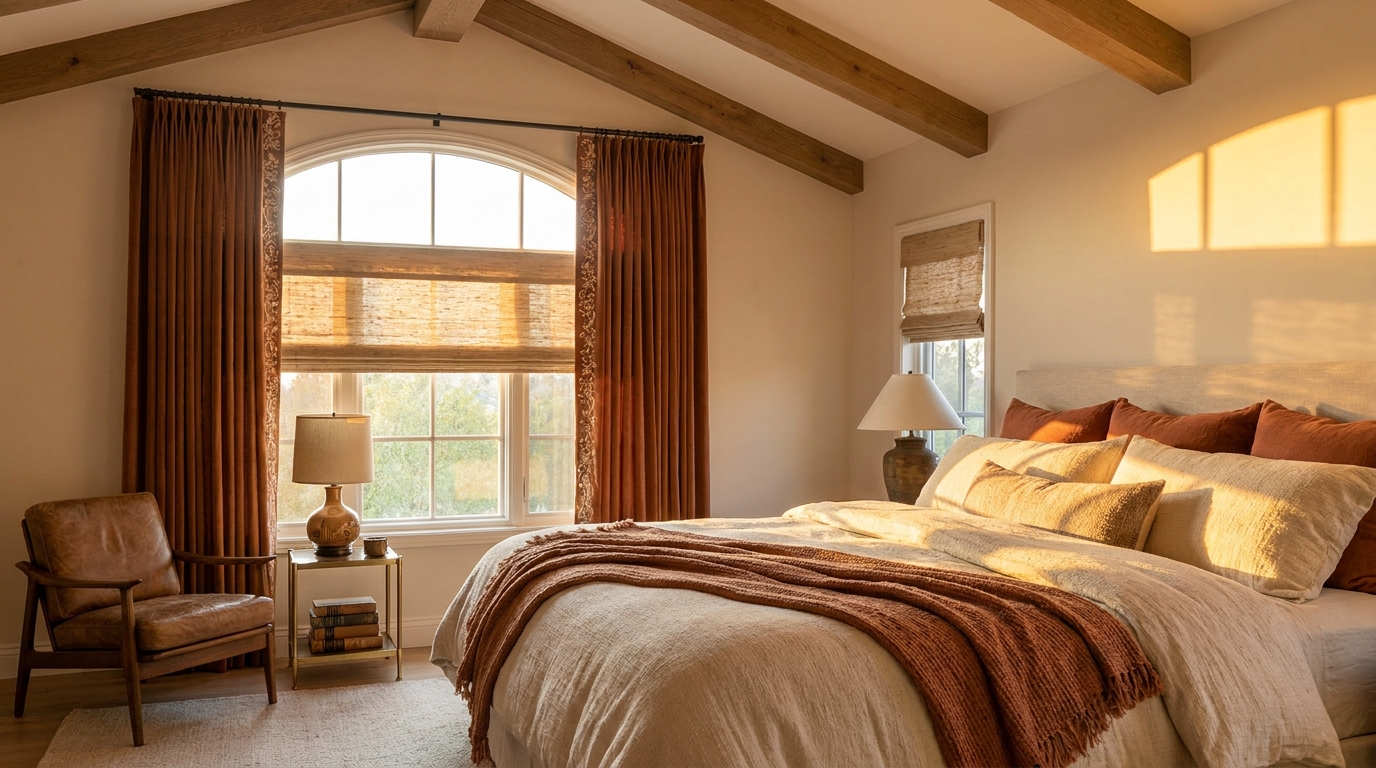
Woven wood and Roman shades. Depends entirely on the liner. Unlined woven wood passes a surprising amount of light through the weave. A privacy or blackout liner changes the product completely.
Drapery. Lined panels on a traverse rod protect what they cover, and they can stack off the glass when you want the room open. Good on tall living-room windows where a hard treatment would look heavy.
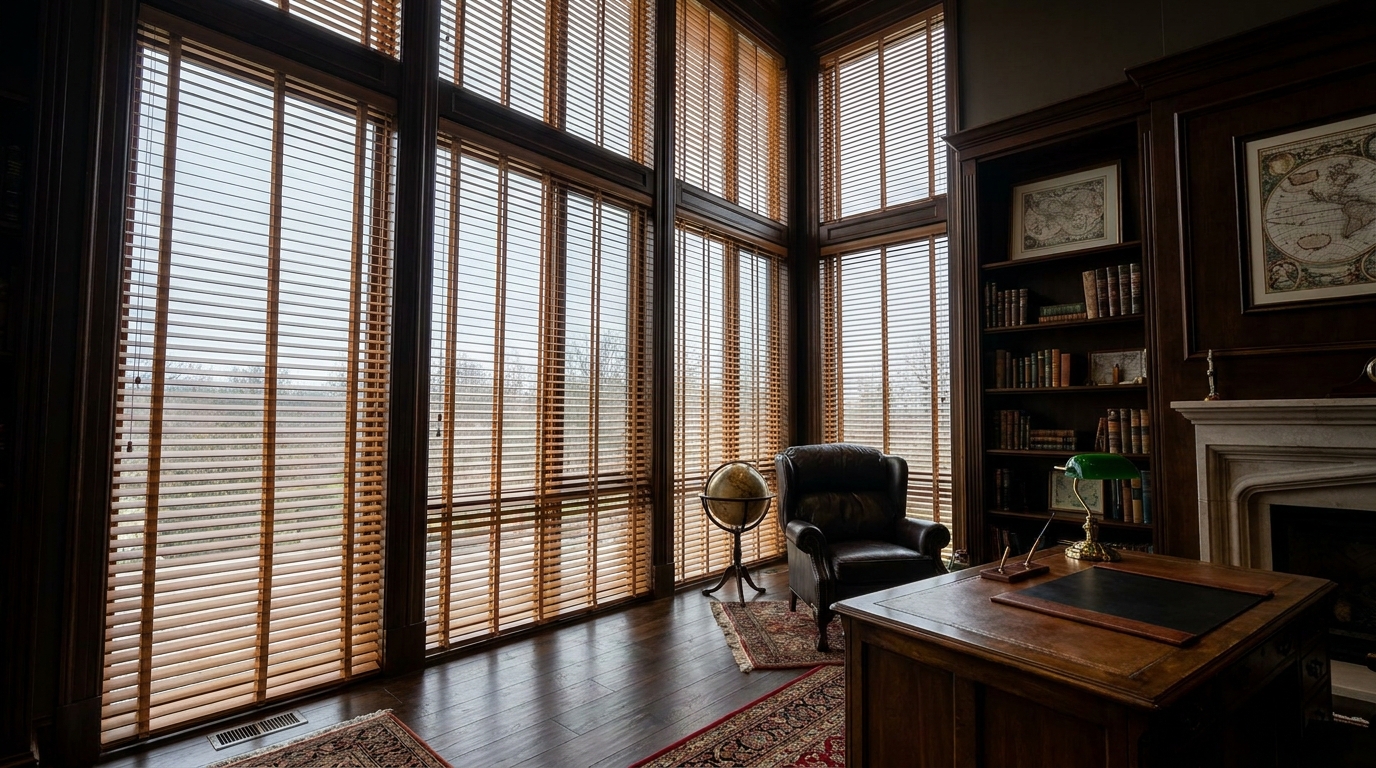
Aluminum, wood and faux wood blinds. Same story as shutters, with more light leak at the slats and routing holes.
One thing that helps regardless of product: the treatment needs to cover the whole opening. Light spilling around a shade that is mounted narrow, or over the top of a panel, will still lay a line on the floor.
Openness factor, explained without the jargon
Solar screen fabrics are rated by openness — the percentage of the fabric that is holes rather than yarn. Lower number, tighter weave, less light and less view.
- 1% to 3%: very dense. Strong glare and fade control, view reduced to a soft outline. Good on a west slider where the afternoon is unusable otherwise.
- 5%: the common middle. Usable view, meaningful cut in direct sun. Our default recommendation on most Conejo Valley family rooms.
- 10% and up: you keep a clear view of the hills or the water. You are not doing much for fading.
Color matters as much as openness. A dark fabric reads as a sharper view because your eye isn't fighting glare off the yarn; a light fabric bounces more heat back out but washes out the view. Same 5% openness, very different room.
Window film is a different product, and it can stack with shades
Film goes on the glass, works around the clock, and does not have to be operated by anyone. That last part is its real advantage over any shade. Homeowners with a lot of fixed west glass — a two-story great room window in Westlake Village, a wall of sliders in Camarillo — often do film plus a shade, and that combination protects better than either alone.
We do not install film, so take this as reporting rather than a pitch. Three things to check before you buy it: whether the installer will warrant it against thermal stress cracking on dual-pane low-E glass, whether it voids your window manufacturer's warranty (some do), and what the film looks like in ten years, because cheap film bubbles and purples. Get that in writing.
A plan for a room you still want to use
What we usually end up specifying on a faded-floor call:
- Solar shades at a tight openness on the two or three west and southwest openings that are actually causing the damage, rather than one product everywhere.
- Motorization on tall or hard-to-reach glass, and on a schedule so the shades drop at 3pm whether anyone is home or not. Unused shades protect nothing.
- Shutters or a softer treatment through the rest of the house, where fading is not the problem and you care more about the look and about wiping Santa Ana dust off a durable finish. We went deeper on that split in shutters through the house, shades on the hot rooms.
- Move the rug and rotate the furniture once a season. It will not stop the fade, but it prevents the hard line where the sofa sat.
On budget: roller, solar and cellular shades are priced per window, with motorization added per shade. Plantation shutters are priced by the square foot, billed at a 12 square foot minimum per opening. Lined drapery is priced per window. Oversized slider and great-room glass prices higher, which is why a firm number has to come from your sizes. Every home is different, so we give a free written quote from your window sizes or photos.
If you want that number: we come to the house, measure every window, bring real samples so you can hold a 3% and a 5% screen against your own glass at 4pm, and leave you with a firm quote. The in-home consultation is free. Book a measure, or if you already have a bid in hand, upload it to Quote Check and we'll read it line by line.
Frequently asked questions
Do solar shades stop fading completely?
No. A tight-weave solar shade cuts a large share of the direct sun that reaches your floor, but any fabric you can see through is passing visible light, and visible light fades finishes and fabrics too. The only interior product that effectively ends exposure is an opaque blackout or room-darkening fabric, and only while it is down.
What openness factor should I choose for a west-facing slider?
On a hot west or southwest opening in the Conejo Valley, 3% is the usual pick when fade and glare control matter most, and 5% is the common compromise when you still want a usable view of the yard. 10% and above keeps the view clear but does relatively little for fading.
Are plantation shutters good UV protection?
Closed, yes — a closed louver is an opaque panel and blocks the beam. Tilted, much less so, and a low western sun can shine straight through the louver gap onto the floor. Shutters protect a room well in the way most people use them in the evening, less so at midday with the louvers open.
Should I add window film as well as shades?
It's worth considering on large fixed west glass, because film works all day with no one operating it. Confirm with the film installer that they warrant against thermal stress cracking on dual-pane low-E glass, and check whether the film affects your window manufacturer's warranty. We don't install film, so treat that as reporting rather than a recommendation.
Will new treatments fix hardwood that has already faded?
No. Fading is a change in the finish and the wood itself, and covering the window only stops it from getting worse. Refinishing evens the color back out; after that, a shade or shutter on the offending window keeps a new line from forming.
In Ventura County? Get a free quote from a local installer
Serving Thousand Oaks, Newbury Park, Westlake Village, Oak Park, Simi Valley and nearby.
- Quote from your window sizes and photos, usually the same day
- See real samples in your space
- We carry every major manufacturer