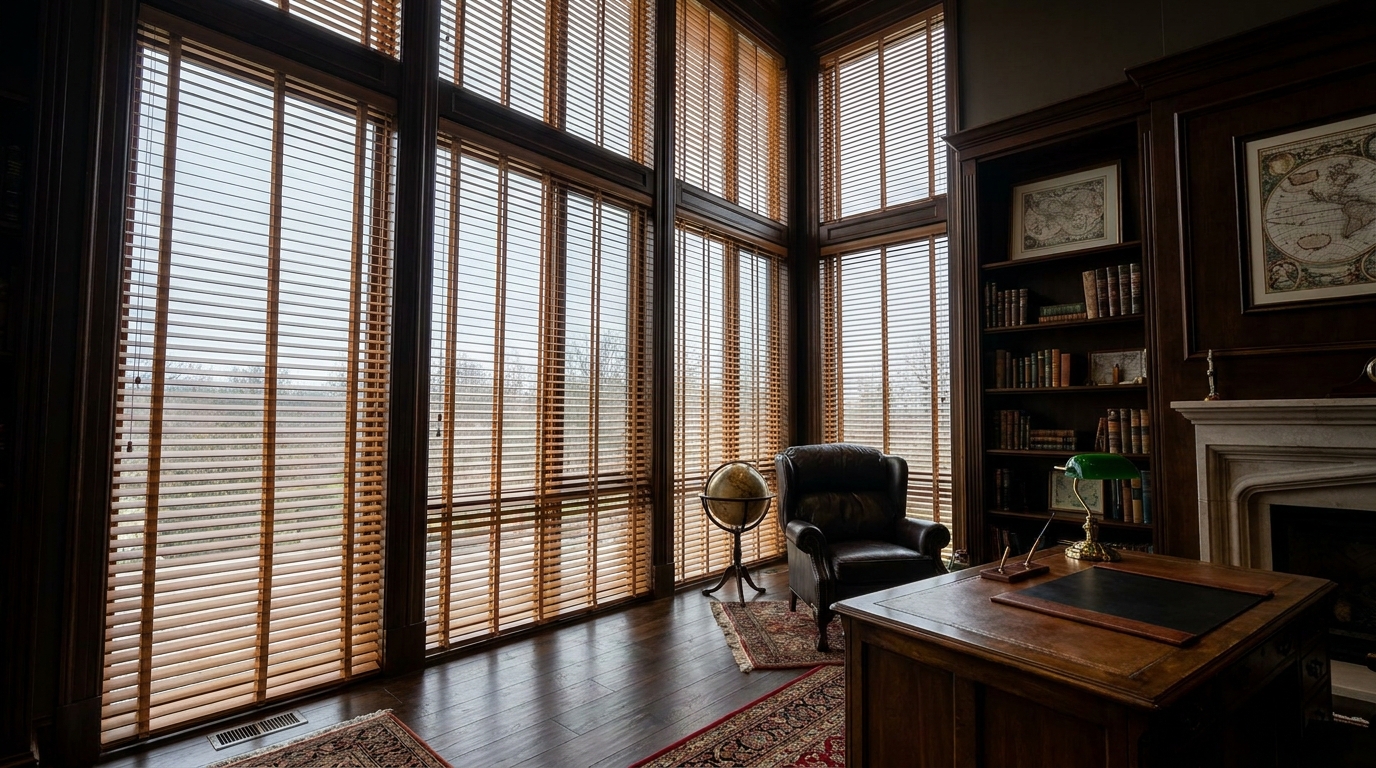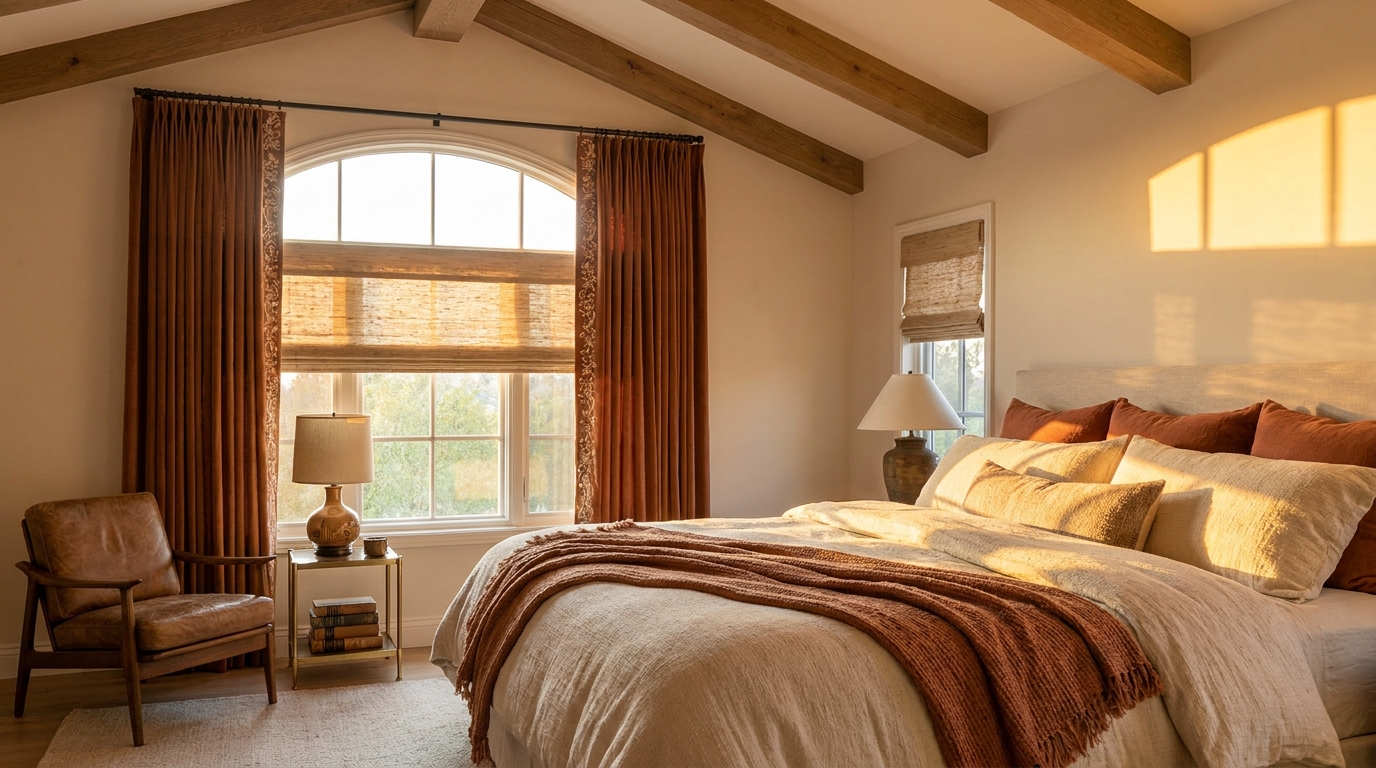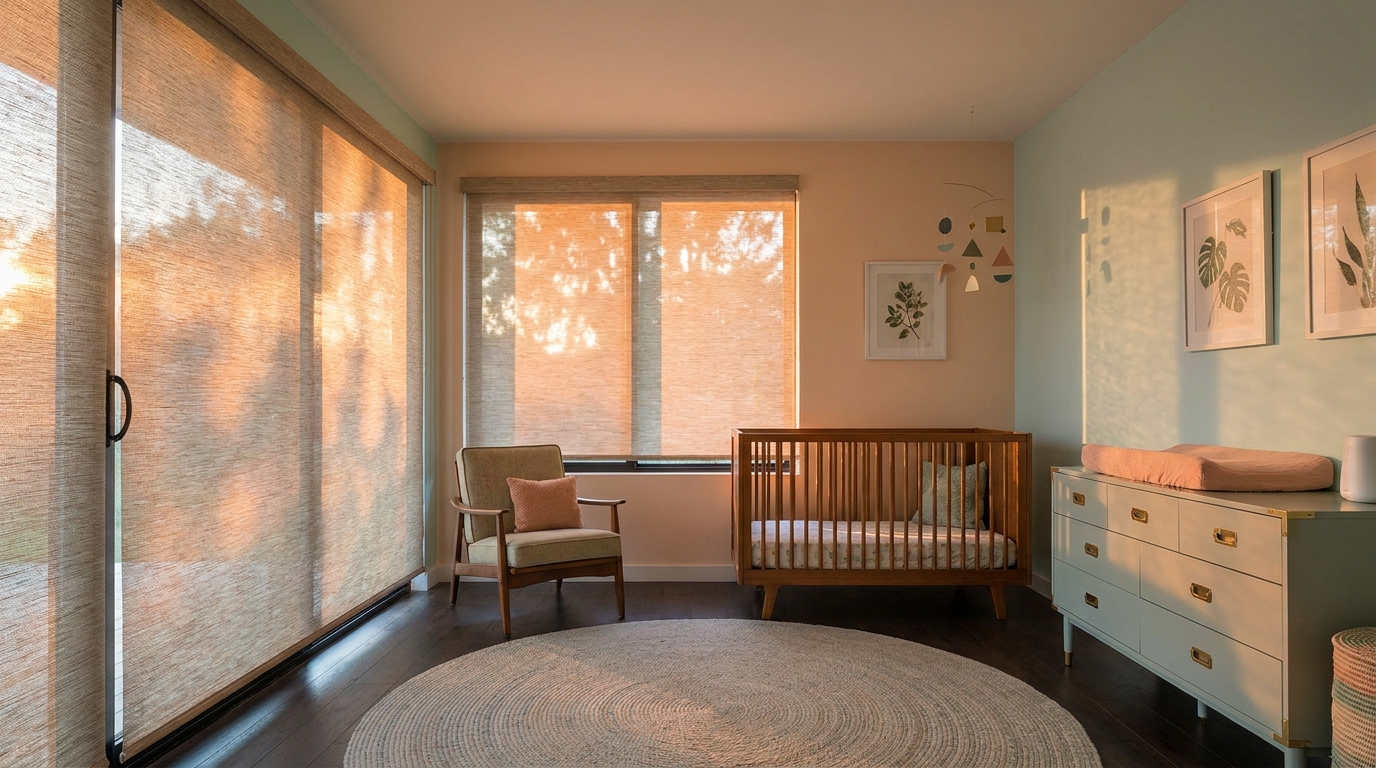
A solar shade reduces fading, it does not stop it — the tighter the weave and the more hours it's down, the more protection you get, and no shade that you can see through is blocking all of the light that bleaches a floor. Window film is a separate product that works on the glass itself, stays working when the shade is up, and is the right thing to add when you refuse to cover the view during the day.
What's actually fading the floor in a Point Dume living room
Fading is a chemical reaction in a dye, a finish, or a wood fiber, and three things drive it. Ultraviolet light is the most aggressive per unit of energy. Visible light — ordinary daylight, the part you can see — does a large share of the damage too, simply because there is so much more of it. Heat accelerates both.
That last point matters here. Along the coast in Malibu, Pacific Palisades, and Manhattan Beach, homeowners hear "UV" and assume a product that handles UV handles fading. It doesn't. You can block most of the ultraviolet and still watch a walnut floor go amber and a blue rug go gray, because visible daylight kept coming through. Anything you install that still lets you see out is still letting fading energy in. That's not a defect. It's physics.
The Westside makes this worse in two specific ways. First, reflected light. A house on Point Dume, in Malibu Colony, or along The Strand takes direct sun from above and a second wash of light bouncing off water and pale sand. Rooms that face the ocean get more total light-hours than the same room would three miles inland. Second, glass area. A rebuild in Santa Monica Canyon or a newer build in Brentwood Park often has a whole wall of floor-to-ceiling glass with an eave that does nothing after four o'clock.
By orientation, in rough order of who calls us: south-facing glass does the most cumulative damage, because it takes sun all day in every season. West-facing glass does the most visible, fastest damage to a specific patch of floor, because the low afternoon sun drives a hard-edged beam deep into the room. East is milder but not zero. North glass fades things slowly and evenly, which is why nobody notices until they move a console table.
The tell is always the same: lift the corner of an area rug, or slide the sofa, and look at the line. That line is your dosimeter.
In Malibu & West Los Angeles? Get a free quote from a local installer
Send us your window sizes and a few photos and we'll quote you, usually the same day. Want us to come out with samples and measure? The consultation is free. Call or text us three days and times that work.
Serving Malibu, Pacific Palisades, Santa Monica, Brentwood, Bel Air and nearby.
Openness factor, in plain terms
Solar screen fabric is a woven mesh. Openness factor is the percentage of the fabric that is hole rather than yarn. A 10% openness fabric is ten percent open space; a 1% is nearly solid.
- 10% — an easy view out, noticeably bright, the least protection. Fine on north glass or a covered patio slider.
- 5% — the common compromise on ocean-view walls. You keep the water, you kill most of the glare, you cut a meaningful share of the light reaching your finishes.
- 3% — view is still there but softer and more screened. Better for west-facing rooms with real fading damage.
- 1% — reads almost as a solid from inside during the day. Strong protection, view mostly gone.
Two things people get wrong. Color matters as much as openness: a dark charcoal 5% gives you a sharper view out and better glare control, while a white or linen 5% bounces more light back at the glass but washes out the view with haze. And the holes are not selective. Whatever passes through that open percentage is full-strength daylight, UV included. A 5% shade is not "95% protection" — the yarn itself also transmits and re-radiates some energy — and we won't quote you a number, because the honest figure depends on the exact fabric, color, and glass behind it.
The other variable nobody prices in: a shade only protects while it's down. Two identical houses, same fabric, wildly different fading, because one family drops the shades at two o'clock and the other leaves them up until the sun is in their eyes. This is the single strongest argument for motorization on tall or hard-to-reach glass. A shade on a timer or a sun sensor runs every day whether you're home or not. Motorization is added per shade, on top of the shade itself.
How each product actually ranks for fade protection
From most protective to least, assuming the treatment is closed:
- Blackout roller or blackout cellular, side-channeled. Opaque fabric plus tracks that close the light gaps at the edges. This is as close to full protection as an interior product gets. It's also a dark room, which is why it belongs in a media room, a primary bedroom, or a wall where a piece of art matters more than the view.
- Room-darkening fabrics. Opaque cloth without side channels. Very effective on the field of the window, with a halo of light around the perimeter that will eventually mark the floor in a stripe.
- Plantation shutters, louvers fully closed. A rigid opaque panel with a semi-sealed frame. Excellent — when closed. Most people live with them tilted, and a tilted louver aims a bright band of sunlight directly at the floor, which is why we see faded strips under shuttered windows in Beverly Hills and Trousdale Estates.
- Lined and interlined drapery. Very good over the panel width, and the fabric itself is sacrificial — the lining fades so the drape doesn't. Drapery is also the only product that keeps protecting while looking soft and open, if you stack it wide enough to actually cross the glass when drawn.
- Tight solar screen, 1% to 3%. Real reduction, view preserved in shadow form.
- 5% to 10% solar screen. Meaningful glare and heat help, moderate fade help.
- Woven wood shades. Beautiful, and among the weakest for fade control unless you add a liner — the natural weave is full of gaps, and the reeds themselves will sun-bleach unevenly.
One more note for coastal houses: whatever you choose, the hardware matters. Salt air in Malibu and Marina del Rey eats cheap chain, cheap brackets, and unsealed steel fasteners. That's a corrosion conversation, not a fading one, but it's the reason a shade fails early here.
When window film is the better second layer
Window film is a thin laminate applied to the glass by a film installer, not by us and not by any window covering company as part of a shade order. It's worth understanding because it solves the problem a shade can't: it works all day, every day, with nothing down, and it doesn't touch your view.
Film handles ultraviolet very well and, depending on the grade, some of the visible and infrared load too. What it can't do is give you privacy at night, block a low sun from hitting you in the face, or darken a bedroom. What a shade can't do is protect a room while it's open. The two are complements, not competitors.
The combination we'd suggest for a big south or west ocean-facing wall: clear UV-rejecting film on the glass, plus a 3% or 5% solar shade you can drop in the afternoon. On a rebuild or new construction, ask your glazier whether the specified units already have a low-E coating and laminated inner lite — a lot of newer Westside glass is already doing part of the film's job, and paying twice for it is a waste.
On budget: solar, roller, zebra and cellular shades and custom drapery are priced per window; plantation shutters are priced per square foot with a 12 square foot minimum per opening. Film is quoted separately by a film company, per square foot of glass. Every home is different, so we give a free written quote from your window sizes or photos. Request yours here.
A workable plan, room by room
Protect the things you can't replace first. Art, a wool rug you love, a piano, a leather sectional — those rooms get room-darkening or blackout, or film plus a tight solar shade. Rooms where the view is the entire point get a 3% or 5% screen and motorization so the shade actually runs on schedule. Bedrooms get blackout for sleep, which handles fading as a side effect. Hallways, baths, and north rooms don't need a fade strategy at all.
Also move things. Rotating a rug twice a year and shifting a sofa eighteen inches off a window does more than most people expect, and costs nothing.
If you're weighing whether the problem is your glass, your orientation, or your shades, that's a walk-through, not an email. When you're ready, book an in-home visit — someone comes out, measures every window, brings real samples you can hold up against your own floor in your own light, and you get a firm quote with installation included. The in-home consultation is free. If you already have a quote from someone else and want a read on what's in it, upload it to Quote Check. And if heat is as much of an issue as fading, our write-up on cooling a west-facing ocean-view room covers that side of it.
Frequently asked questions
Will a solar shade stop my hardwood floors from fading?
It will slow it, not stop it. Any fabric you can see through is passing daylight, and visible light fades finishes along with UV. A tighter weave — 3% or 1% openness — protects more than a 5% or 10%, and the shade only helps during the hours it's actually down.
What openness factor should I choose for a west-facing ocean view?
Most Westside view walls land on 5% for a balance of view and control, and 3% where fading or afternoon glare is already a problem. Darker fabrics give a crisper view out and better glare control; lighter fabrics look brighter inside but haze the view.
Do plantation shutters protect against fading?
Fully closed, yes — a closed louvered panel is opaque and blocks the beam. The catch is that most people live with shutters tilted, and a tilted louver aims a band of sunlight onto the floor. That's why you often see a faded stripe under a shuttered window.
Is window film better than shades for UV protection?
It's different. Film works on the glass all day with nothing down and doesn't affect your view, but it can't give you privacy, darkness, or glare control at a low sun angle. Shades do those things but only while lowered. On a large south or west glass wall, many homeowners use both.
Does motorization actually help with fading?
Indirectly, and more than people expect. A shade protects only when it's down, and a motorized shade on a timer or sun sensor lowers every afternoon whether anyone is home or not. Motorization is added per shade.
In Malibu & West Los Angeles? Get a free quote from a local installer
Serving Malibu, Pacific Palisades, Santa Monica, Brentwood, Bel Air and nearby.
- Quote from your window sizes and photos, usually the same day
- See real samples in your space
- We carry every major manufacturer