There is no single best treatment for a sliding glass door, but there is a best one for your door, and the deciding factor is usually stack-back — how much of the glass the covering still blocks when it is fully open. If you walk through the door ten times a day and the view matters, panel tracks or a drapery on an extended rod usually win; if the door is mostly a light-and-heat problem in a west-facing room, a solar or roller shade or a set of bypass shutters is the better buy.
Stack-back is the number nobody quotes you, and it decides everything
Every treatment that opens sideways has to put its material somewhere. That pile is called the stack, and on a slider it lands right where you want to see the pool.
Rough real-world stack on a typical 6-to-8-foot slider:
- Vertical blinds: a stack about 12 to 18 inches wide pushed to one side, sometimes more on a wide opening. The vanes are thick and there are a lot of them.
- Sliding panel track: with four panels on a four-channel track, the closed treatment collapses to roughly a quarter of the opening, stacked off to one end. On a wide opening you can run panels off both sides and split the stack.
- Bypass or bifold shutters: bypass panels slide behind each other but never leave the opening, so you are always covering at least half the door. Bifolds fold to the jambs and clear more glass, but they stick into the room.
- Drapery: the stack is roughly a third of the rod width if the rod stops at the opening. Extend the rod 12 to 18 inches past each side and the fabric parks on the wall instead of the glass.
- Roller, solar or cellular shade: the stack is vertical — a 3-to-4-inch roll at the header and nothing on the sides.
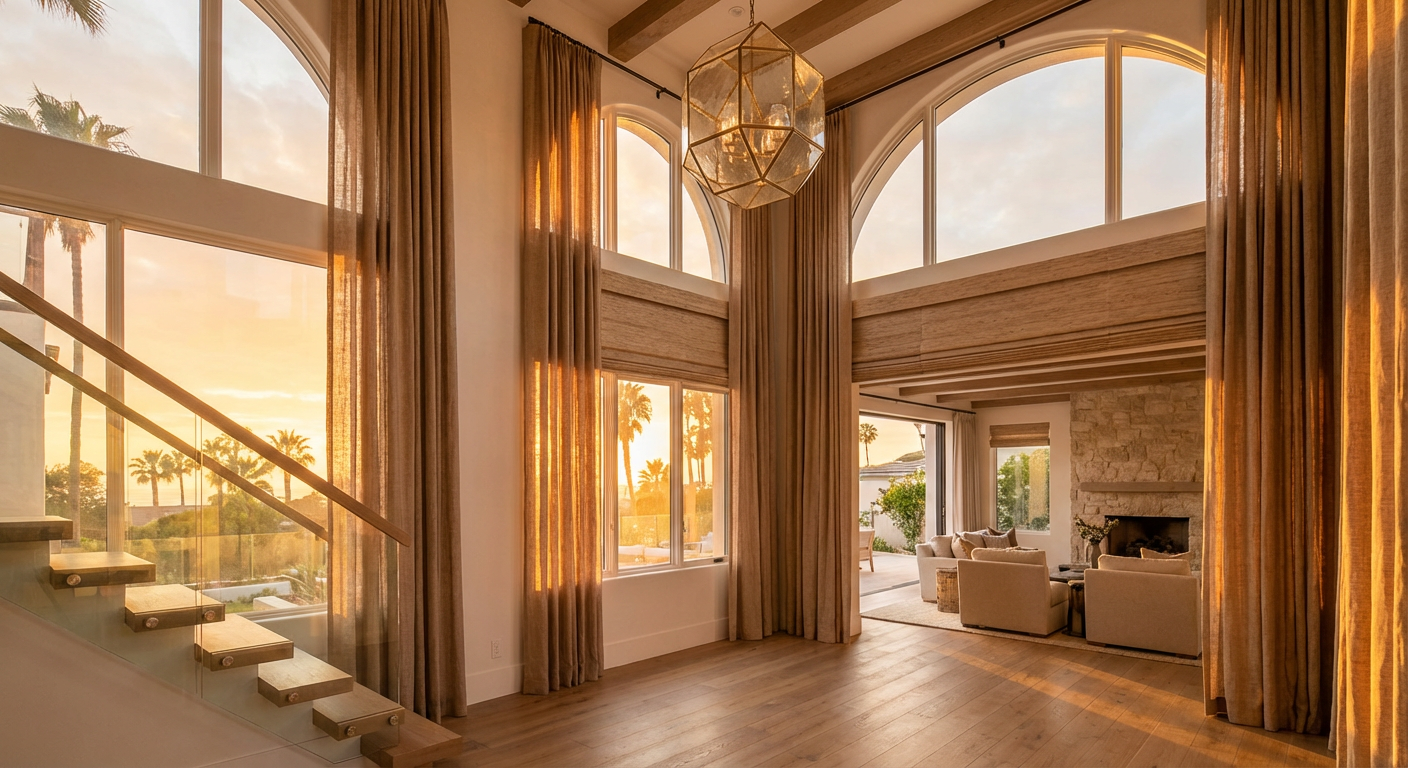
This is why so many homeowners in Woodland Hills, Encino and Tarzana end up disliking verticals on a 1960s ranch slider. The door is wide, the room is not, and the stack eats the corner of the view. It is also why the two-story great rooms in The Oaks in Calabasas, Hidden Hills and the Porter Ranch hillside tracts almost always end up on panel tracks or drapery: there is wall to park the stack on.
In San Fernando Valley? Get a free quote from a local installer
Send us your window sizes and a few photos and we'll quote you, usually the same day. Want us to come out with samples and measure? The consultation is free. Call or text us three days and times that work.
Serving Calabasas, Hidden Hills, Woodland Hills, Encino, Tarzana and nearby.
The five realistic options, and what each is actually good at
Vertical blinds
Cheap, functional, and the reason most people are reading this. They tilt for privacy and glare, they clear the door reasonably well, and they handle a 12-foot opening without drama. The problems are mechanical and cosmetic: vanes pop off carriers, the chain tangles, the headrail rattles in a Santa Ana wind, and vinyl vanes cup and yellow after a few inland summers. Fabric vanes look better and last longer than the builder-grade vinyl in most valley tract homes.
Sliding panel tracks
The modern replacement for verticals and the one we specify most often on big sliders. Wide fabric panels ride in a track, and you push them sideways like the door itself. They can be made in solar screen mesh, light-filtering fabric, blackout, or a woven material that reads like a woven wood. The stack is tidy, there is no chain to tangle, and on a wide opening you can split panels so the stack lands on both jambs.
Their weakness is privacy control. A panel is either in front of the glass or it is not — there is no tilt. If you want to keep the neighbor out while still seeing the yard, you pick the fabric openness, not a louver angle.
Bypass and bifold shutters
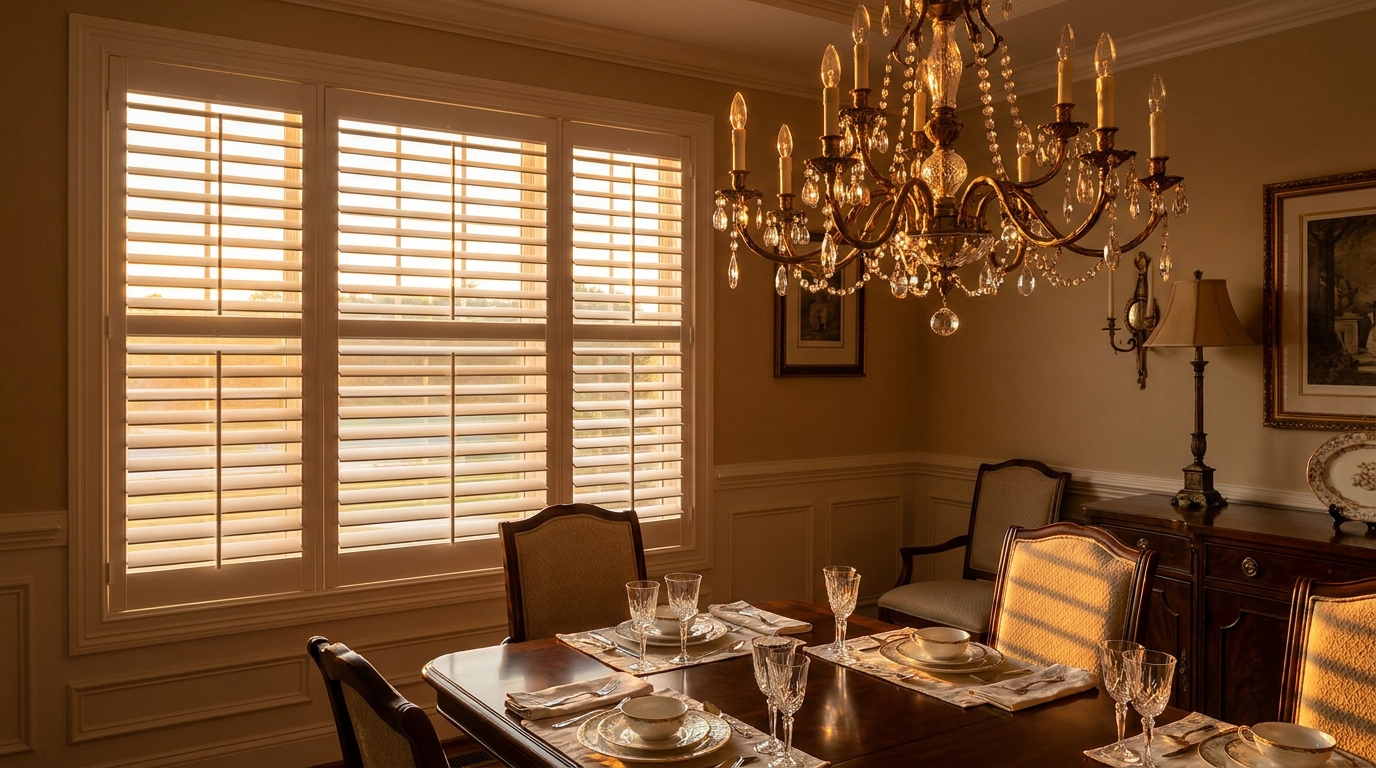
Shutters on a slider look the most finished and hold up the longest, and they give you the one thing panels cannot: louver tilt. Closed, they are an opaque, rigid panel with a pocket of still air behind it, which is real heat and glare control. See our breakdown of how shutters handle valley heat for the physics.
The trade-off is traffic. Bypass panels always cover part of the opening, and you have to slide a panel every time you walk through. Bifolds fold clear but need floor space and a hinge stack that fingers can pinch. Shutters on a slider run $55 to $106 per square foot installed, so a 6-by-8-foot door is billed on 48 square feet and lands well above what most people expect from a "shutter quote." They are the right call on a door you rarely use — a bedroom slider onto a small patio in Sherman Oaks or Studio City, for instance.
Drapery
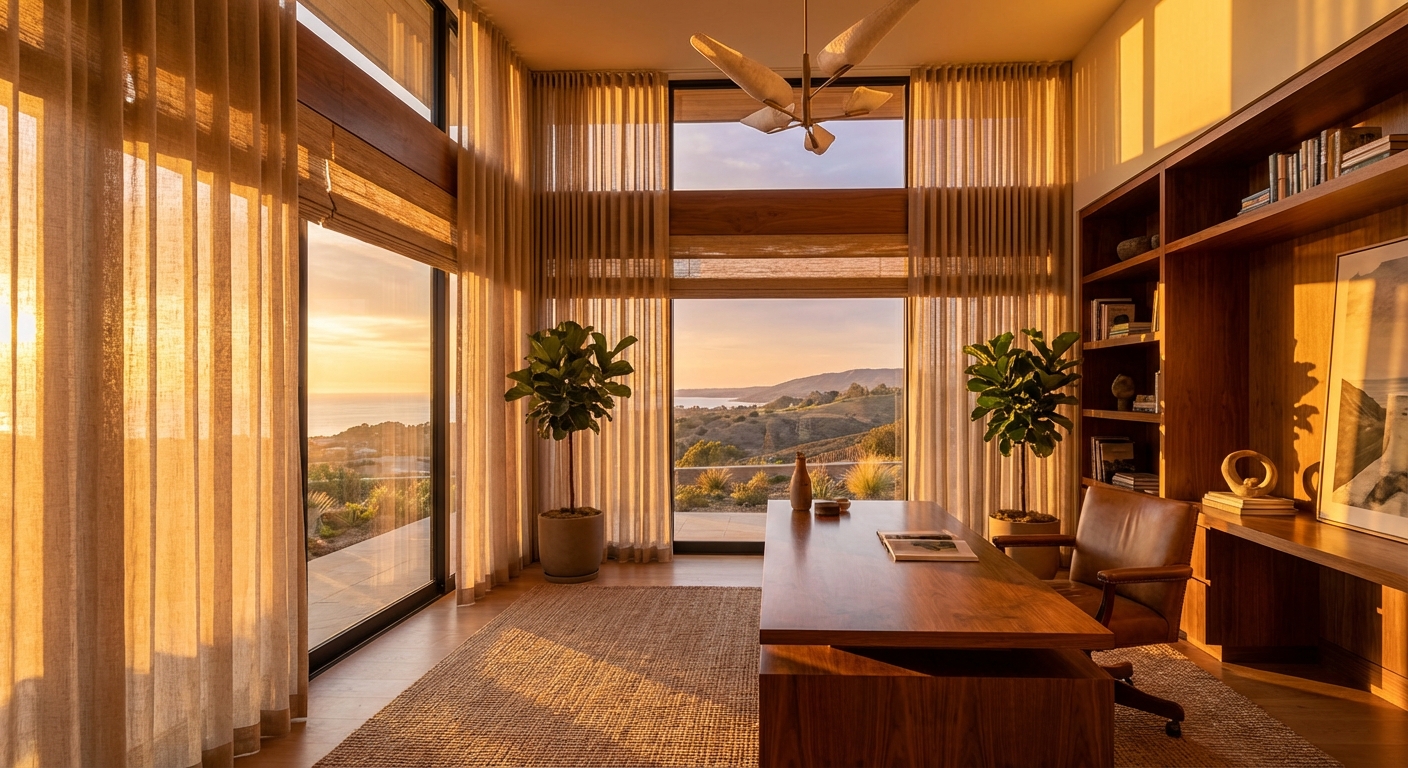
On a big view wall, drapery is the only option that softens a 12-foot expanse of glass and does something for the room acoustically. Ripplefold on a traveler rod handles daily use well if the rod is long enough for the fabric to park off the glass. Line it and it blocks real heat; leave it unlined and it is mostly a glare filter. Custom drapery runs $800 to $2,500 per window, and a wide slider is on the upper half of that. Motorization adds $200 to $500 and is worth it on a rod you cannot reach.
Roller and solar shades
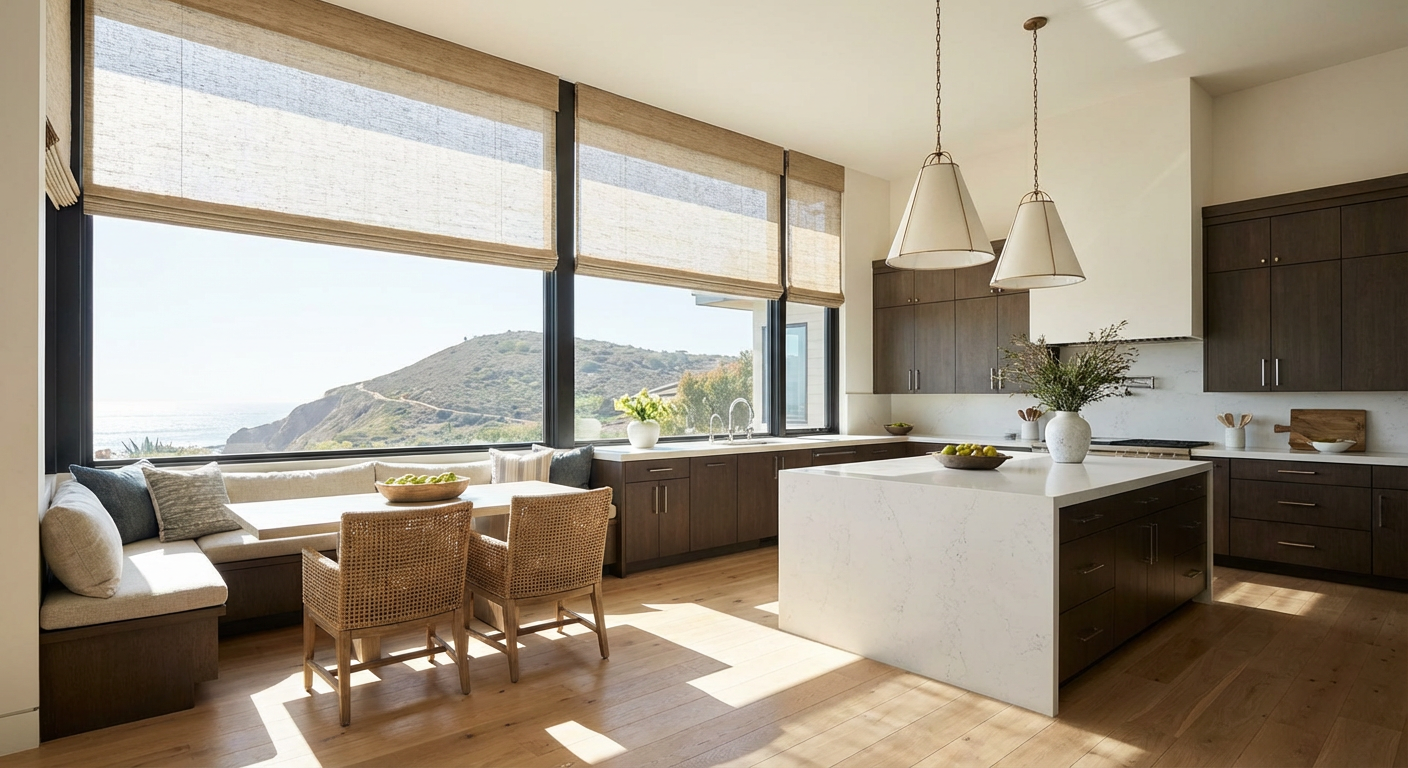
One shade, no side stack, cleanest look. On a slider you either raise it to walk through or, more practically, mount it and leave it down at the height that kills the low sun while you still duck under nothing. Rollers, solar, zebra and cellular shades run $495 to $955 per window installed for a typical opening; a wide slider needs a heavier tube and often sits at the top of that range. The honest limitation is that a full-width roller in front of a door you use constantly becomes a chore, which is why we usually pair one with a door you rarely open or split the coverage.
Heat, glare and the west-facing slider
Most slider complaints in the valleys are afternoon complaints. A west or southwest door in Northridge, Chatsworth or Agoura Hills takes low, nearly horizontal sun from about 4pm until sunset, and no interior product stops that energy at the source — the sun is already through the glass by the time it reaches your covering.
What interior products do is intercept it before it lands on your floor and your skin. For that job, ranked honestly: a lined drapery or closed shutter blocks the most; a 3 percent solar screen panel track or roller cuts glare and most of the direct beam while keeping the yard visible; light-filtering cellular holds back more heat than its thickness suggests; vinyl verticals absorb the sun and then radiate it back into the room. If you have a deep patio cover or mature trees on the west side — common in older Toluca Lake and Granada Hills lots — your interior choice matters less.
Pets, kids and the daily-traffic test
Before you pick a material, count how many times a day that door opens. Ten-plus openings a day changes the answer.
- Dogs: verticals get pushed through and the vanes come off carriers. Panel tracks get nose prints but survive. Shutter panels take claw marks at the bottom rail. A shade you raise clears the issue entirely.
- Kids: cordless is standard on new shades. On panel tracks, the wand is the only moving part. Bifold shutters and small fingers are a poor mix.
- Cleaning: faux wood and composite shutter louvers wipe clean; fabric panels take a vacuum brush; woven materials hold dust.
- Wind: an open slider with a Santa Ana coming through will flap drapery and rattle verticals. Panel tracks in a track are the calmest.
What we'd actually recommend, by situation
- Main patio slider you use all day, indoor-outdoor living: panel track in a solar screen or light-filtering fabric, split-stacked if the opening is over 10 feet.
- Two-story great room view wall in a gated hillside community: drapery on an extended rod, motorized, with a solar shade behind it if the afternoon sun is brutal.
- Bedroom slider, blackout needed: blackout panel track or a blackout roller with side channels. Shutters do not go fully dark at the louver seams.
- Slider you rarely open, privacy from a close neighbor: bypass shutters. Best look, best durability, tilt control.
- Budget-driven rental or flip: fabric vertical vanes on a good headrail, not vinyl.
One more thing worth matching across quotes: whether the treatment clears the door handle, and how much the header projects. Those two details cause more slider complaints than material choice does.
If you want this decided on your actual door rather than in the abstract, book an in-home visit with 818 Shutters & Shades. Someone comes out, measures every window, brings real samples you can hold up against the glass, and you get a firm quote with installation included. The in-home consultation is free. If you already have a bid in hand, run it through our free Quote Check.
Frequently asked questions
What is the best alternative to vertical blinds on a sliding glass door?
For a door you use daily, a sliding panel track is the closest replacement and usually the better product. It moves sideways like the door, has no chain or individual vanes to fail, and stacks to roughly a quarter of the opening. On very wide sliders you can split the panels so the stack parks on both jambs instead of eating one side of the view.
Can you put plantation shutters on a sliding glass door?
Yes, usually as bypass panels that slide behind each other on a track, or as bifolds that fold to the jambs. Bypass panels always cover at least half the opening, so they suit doors you rarely open. Shutters run $55 to $106 per square foot installed, with a 12 square foot minimum per opening, so a full slider is a larger number than most people expect.
What is stack-back and why does it matter on a slider?
Stack-back is how much of the glass a treatment still covers when it is fully open. Verticals typically stack 12 to 18 inches to one side, drapery about a third of the rod width unless the rod extends past the opening, and bypass shutters never leave the opening at all. Roller and solar shades have no side stack. On a view door, stack-back matters more than material.
What works best on a west-facing slider in the Valley?
A solar screen panel track or roller at a low openness cuts the low afternoon sun while keeping the yard visible, and a lined drapery or closed shutter blocks more heat but also the view. No interior product stops solar gain at the source, since the energy is already through the glass. Exterior shade, a patio cover or trees on the west side does more than anything hung inside.
Is installation included in your prices?
Yes. Quoted prices include installation, and the install warranty is 12 months. Manufacturer warranties vary by product and we spell out which one applies to what you are buying before you order.
In San Fernando Valley? Get a free quote from a local installer
Serving Calabasas, Hidden Hills, Woodland Hills, Encino, Tarzana and nearby.
- Quote from your window sizes and photos, usually the same day
- See real samples in your space
- We carry every major manufacturer