Most consumers shopping for premium roller shades have never heard of Rollease Acmeda. The company doesn't run TV commercials. They don't have consumer showrooms. They don't quote homeowners or send sales consultants to in-home appointments.
But if you've been quoted a premium roller shade from The Shade Store, Hunter Douglas, Lutron, Lafayette, Insolroll, or dozens of other brands — there's a strong chance the hardware inside that shade was manufactured by Rollease Acmeda.
This is one of the most under-recognized but important facts about how the premium roller shade market actually works. So let's pull this curtain back.
What Is Rollease Acmeda?
Rollease Acmeda is the largest independent OEM (original equipment manufacturer) hardware company in the window covering industry.
The basics:
- Headquarters: Stamford, Connecticut, with a major distribution center in Conover, North Carolina
- Founded: 1980 (as Rollease, Inc.), merged with Australian company Acmeda to form Rollease Acmeda
- Estimated revenue: $100 million to $250 million annually
- Global team: Over 270 associates with distribution facilities in the US, Australia, and Europe
- Customer reach: Serves thousands of customers across more than 40 countries
- Owner: JM Family Enterprises, a privately held $24 billion company that also owns Home Franchise Concepts — parent of Budget Blinds
Rollease Acmeda doesn't sell directly to consumers. They sell to OEMs (other manufacturers who put Rollease components into their finished products), to fabricators (companies who buy Rollease parts and assemble shades), to commercial contractors (for office building shade systems), and to interior designers and architects who specify roller shade hardware for projects.
This puts Rollease Acmeda in a unique industry position. They're the supplier to many of the retailers you've heard of — including some that compete directly with each other.
🏠 Want Expert Advice on YOUR Windows?
Send us your window sizes and photos for a quote, usually the same day. Want us to come out with samples and measure? The consultation is free. Call or text us three days and times that work.
What Rollease Acmeda Actually Makes
Their product line covers basically every component of a roller shade except the fabric itself:
Clutches. The R-Series clutch is Rollease's flagship product — the mechanism that lets you lift and lower a roller shade with a beaded chain. According to industry reports, R-Series clutches have been installed in residential and commercial projects for over 30 years. They're known as one of the most reliable clutch systems in the industry.
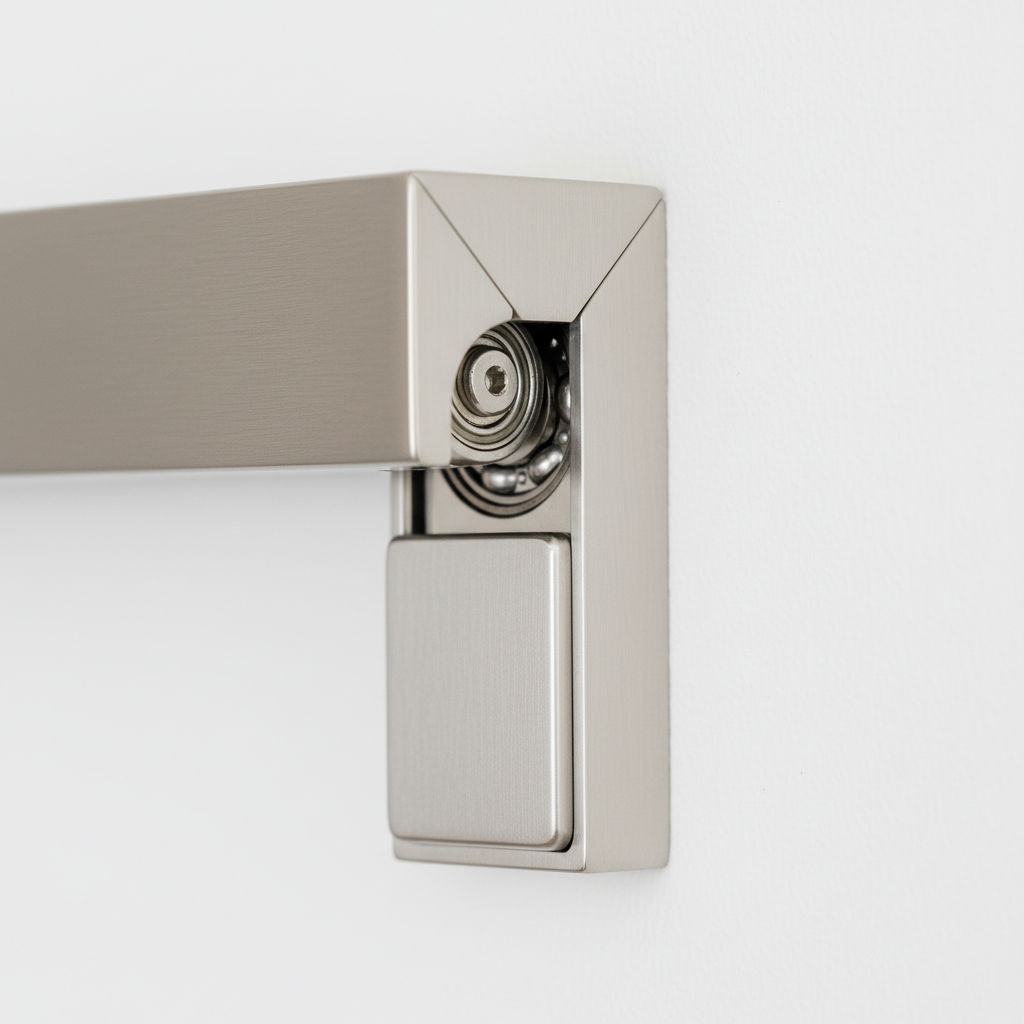
Brackets and Mounting Hardware. The brackets that secure a roller shade to the wall or ceiling. Rollease makes simple plastic brackets at the low end of the line and premium metal brackets at the high end — including the Opulence Series, which features magnetic screw covers, integrated bearings for quieter operation, and metal finishes in white, black, satin nickel, and antique bronze. The Opulence brackets are notably what gets used in premium installations where the bracket itself is part of the visible aesthetic.
Fascias. Decorative covers that hide the roller mechanism. Rollease makes fabric-wrapped fascias, metal cassettes, and various profile shapes that work across their bracket platforms.
Tubes and Hem Bars. The aluminum tubes the fabric rolls onto, and the weighted hem bars at the bottom. Available in various sizes for different shade dimensions and weights.
Motors. Rollease's Automate motorization program competes with Somfy and Lutron for the premium roller shade motor market. Automate motors come in battery, hardwired, and AC-powered versions; with various tube diameters from small residential shades to large commercial installations.
Adapters. Components that let Somfy, Lutron, and other motor brands work with Rollease shade tubes and brackets. This interoperability is important — it's part of why Rollease hardware shows up inside so many different brands.
Who Uses Rollease Hardware
Here's where the picture gets unexpected for most consumers.
The Shade Store. The Shade Store's own installation manuals — publicly available on their website — explicitly reference Rollease Acmeda motors. The 15-channel remote the company sells is a Rollease product (the FCC ID confirms this). Industry discussions on home automation forums consistently identify The Shade Store as a Rollease-based platform. The Shade Store designs their own fabric collections and the overall product experience, but the engine inside the shade is OEM.
Hunter Douglas Designer Roller and Designer Screen. Hunter Douglas roller shades use Rollease components alongside HD's own proprietary headrails and assemblies. The exact composition varies by product line.
Lafayette Interior Fashions. A major shade fabricator that builds extensively on Rollease platforms.
Insolroll. Commercial-focused roller shade manufacturer that uses Rollease components in many of their products.
Lutron Sivoia QS Shades. While Lutron makes their own motors, parts of the shade hardware platform use Rollease components.
Most independent shade fabricators. Local and regional shade fabrication shops across North America build their products on Rollease platforms because the hardware is reliable, the company has strong dealer support, and parts are widely available for service.
The exceptions — major brands that don't primarily use Rollease — include:
- Norman/Nien Made, who manufacture most of their own roller hardware
- Springs/Bali/Graber, who have their own hardware platforms for their roller lines
- Some of Hunter Douglas's higher-end products (Silhouette, Duette, Vignette) which use proprietary HD engineering rather than Rollease components
Why This Matters When You're Shopping
When two roller shade quotes come in at very different prices, the first question worth asking is whether they're built on the same hardware platform. If both are Rollease-based, the underlying engineering is identical — and the price difference is reflecting fabric, fabrication tolerance, warranty, and (most often) markup.
Here's a real example. A premium 1% openness solar shade with a square decorative metal bracket might be quoted:
- From The Shade Store: $1,200 per shade
- From a Hunter Douglas Gallery (Designer Screen): $1,400 per shade
- From a local dealer using a Rollease-based premium line: $700 per shade
All three shades can be built on Rollease Opulence brackets with Rollease R-Series clutches. The fabric may differ slightly — but if both use a 1% openness solar from a major mill like Mermet or Phifer, the practical product is comparable. The price difference is captured almost entirely by marketing, showroom overhead, and channel structure.
This is not a criticism of The Shade Store or Hunter Douglas. Their products are well-made, their fabric curation is genuine, and their installation services have value. But a consumer who understands what's inside the shade can make an informed decision about whether the brand premium is worth what's being charged.
The Opulence Series — A Specific Case
Rollease's Opulence Series brackets are worth singling out because they show up in premium installations and customers should know what they're looking at.
Opulence brackets are metal (round or square shapes), available in white, black, satin nickel, and antique bronze. The design eliminates the need for plastic bracket covers, includes magnetic screw covers that hide fasteners, runs motor wiring cleanly through the bracket via a magnetic motor cover, and includes integrated bearings for quieter shade operation.
This is the kind of hardware that turns up on Hunter Douglas Designer Roller installations, The Shade Store premium shades, and high-end commercial projects. If you see metal brackets like these on a quote from a national chain, you're looking at Rollease Opulence hardware regardless of what brand name is on the proposal. The same bracket can be sourced through any Rollease dealer at substantially less than the chain's retail markup.
What to Take Away
Three points worth holding onto:
First, hardware is not where premium brands actually differentiate. Fabric selection, design support, installation, and warranty service are where genuine differences live. The clutch, bracket, and motor are largely shared across the industry through Rollease, Somfy, and a few other suppliers.
Second, you can buy the same hardware platform for less money. A local dealer who works with Rollease components and a quality fabric program can deliver a shade that's functionally identical to a Shade Store or Hunter Douglas roller shade for significantly less.
Third, ask about the hardware specifically on every quote. Reputable dealers will tell you what's inside. Companies that won't tell you are usually the ones charging the most for it.
In the next post in this series, we'll look at 3 Day Blinds — the company most consumers don't realize was acquired by Hunter Douglas, and what that ownership means for the prices they quote.
Ready to See Your Options?
- Remote quote from your sizes and photos
- See real samples in your space
- We carry every major manufacturer