Shutter Guide
Every shutter option, in pictures.
You'll see real samples at home before anything is ordered.
Color
Bright white is the most popular. The stains are real basswood with the grain showing.
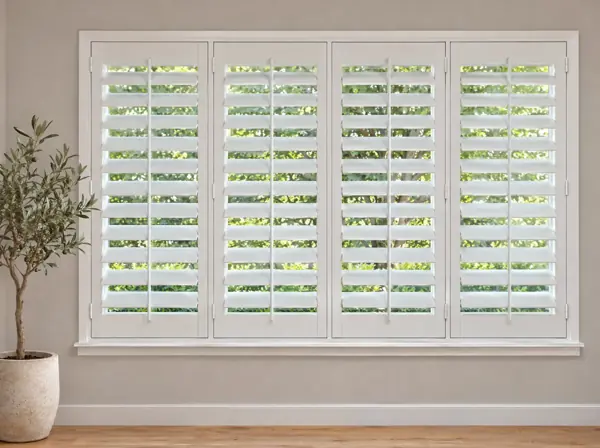 IllustrationWhiteMost popular
Bright, clean white. Comes in poly or painted basswood.
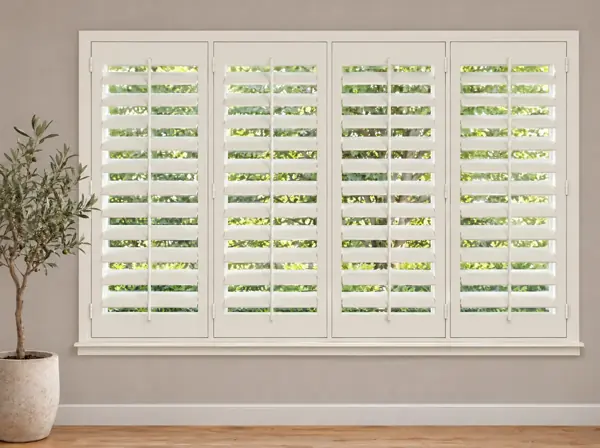 IllustrationOff-white
A softer, warmer white in painted basswood.
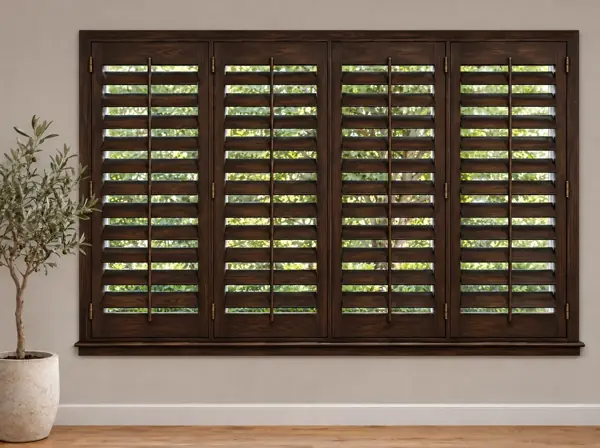 IllustrationEspresso
Dark stained basswood with the wood grain showing through.
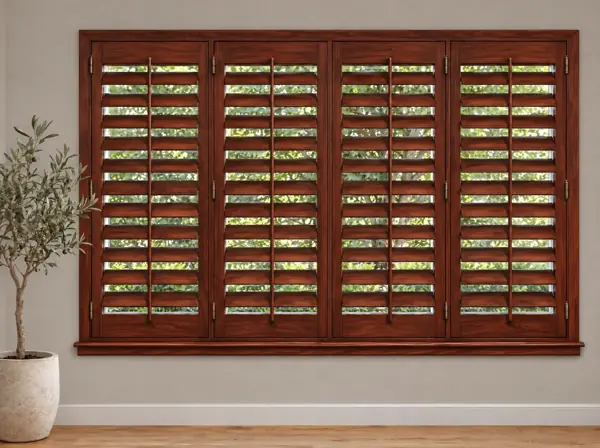 IllustrationMahogany
Reddish-brown stained basswood with visible grain.
Material
White comes in two materials. Off-white and the stains are basswood.
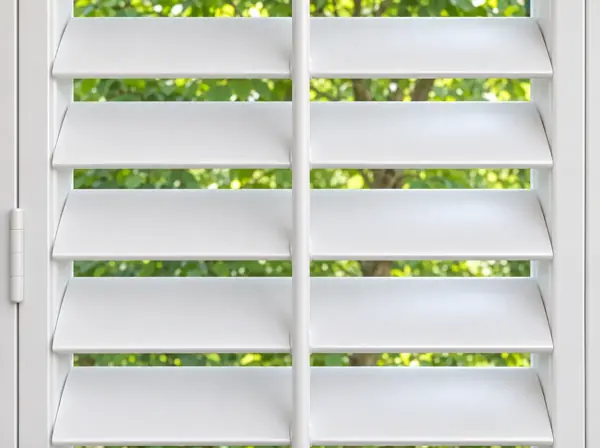 IllustrationPoly compositeBest value
Moisture-resistant, so it's great in kitchens and bathrooms. Panels over 60" tall get a divider rail.
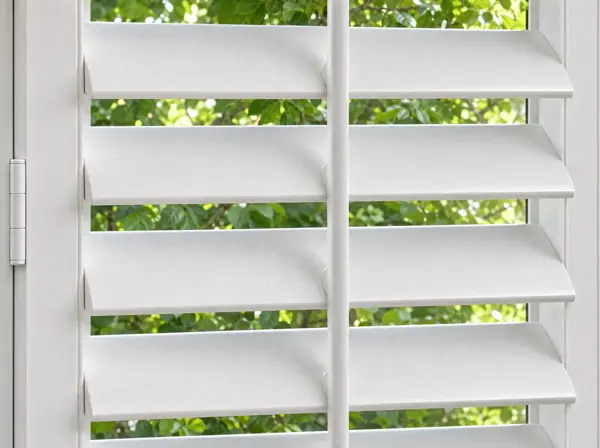 IllustrationPainted basswood
Real hardwood, lighter weight, with a 3-year finish warranty on top of the 10-year construction warranty.
Louver size
Shutters mostly look alike. What changes the look is the width of the louvers (the slats), how you tilt them, and the frame around them.
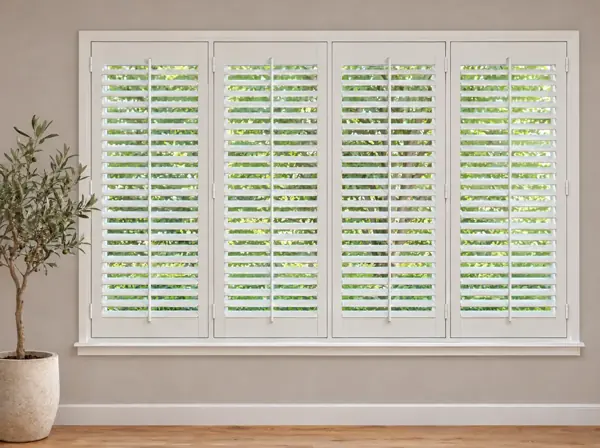 Illustration2 1/2" louversClassic slim
More, thinner slats for a traditional, detailed look. Shows a little less view when open.
- Illustration3 1/2" louversMost popular
A balanced middle size that suits most rooms and windows.
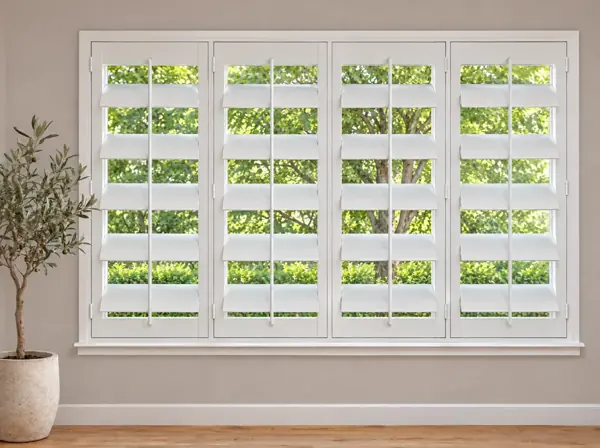 Illustration4 1/2" louversWide plank
Fewer, wider slats and the most open view when tilted open.
How you tilt them
Two ways to open and close the louvers.
- IllustrationFront tilt rodClassic
A slim rod down the front of each panel. Push it up or down to open and close all the louvers together.
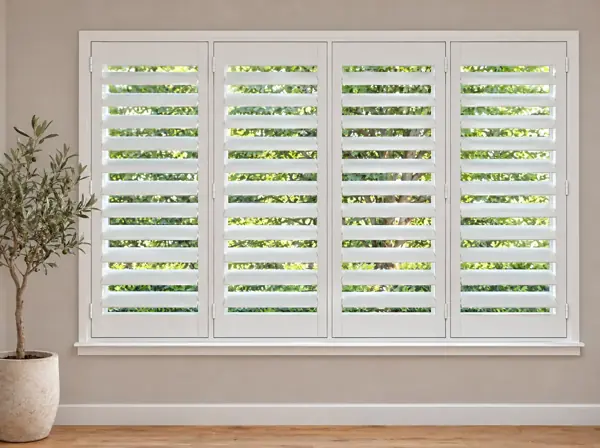 IllustrationClear View (hidden tilt)Cleaner look
No rod on the front. The tilt is hidden on the back edge, so you see clean, uninterrupted louvers and a clearer view.
Frame style
The frame is the trim the panels sit in. These are close-ups of the top corner of each style.
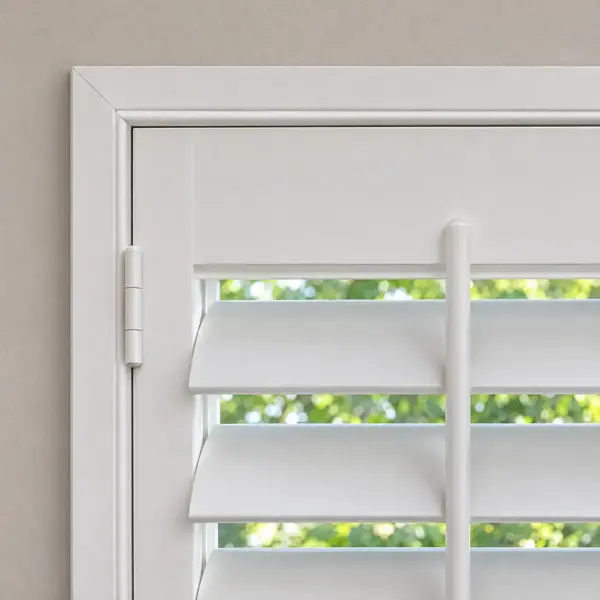 IllustrationBeaded L1 inch
Slim and minimal, with a small rounded bead on the edge. The lightest look on the wall.
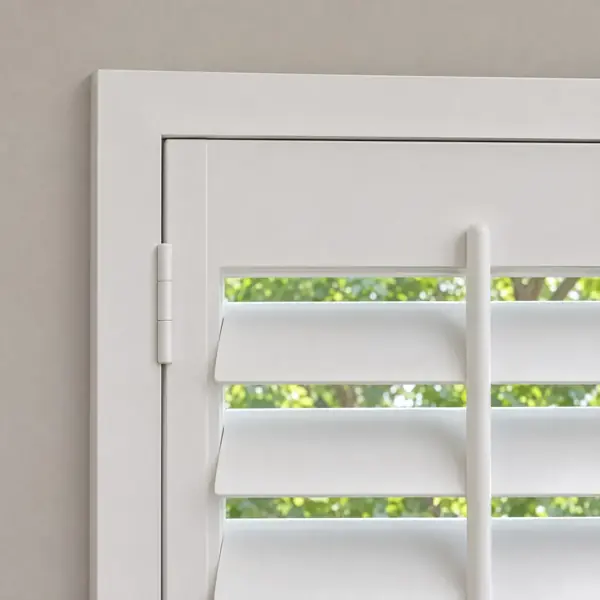 IllustrationFlat Z2 inch
Clean, square, modern edges with no detail.
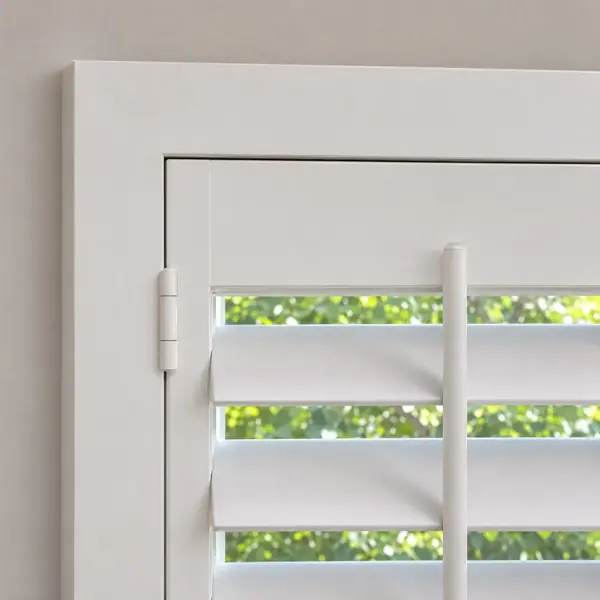 IllustrationFlat Z wide3 inch
The same clean, square edges in a wider 3 inch frame.
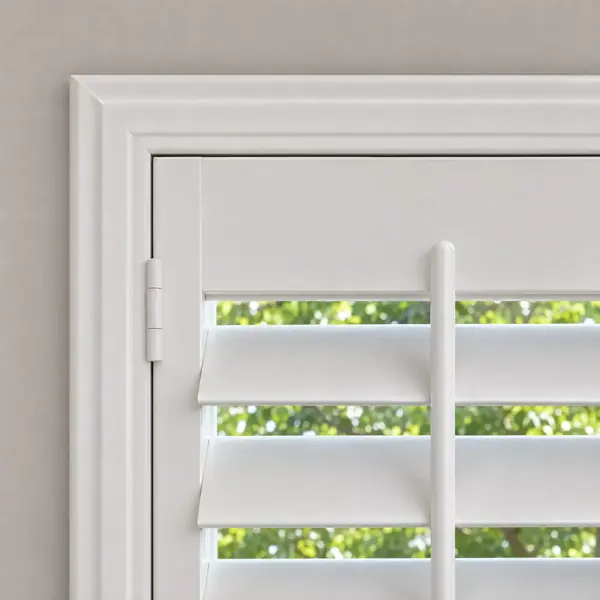 IllustrationMalibu Z2 1/2 inch
A soft stepped profile, like classic window trim.
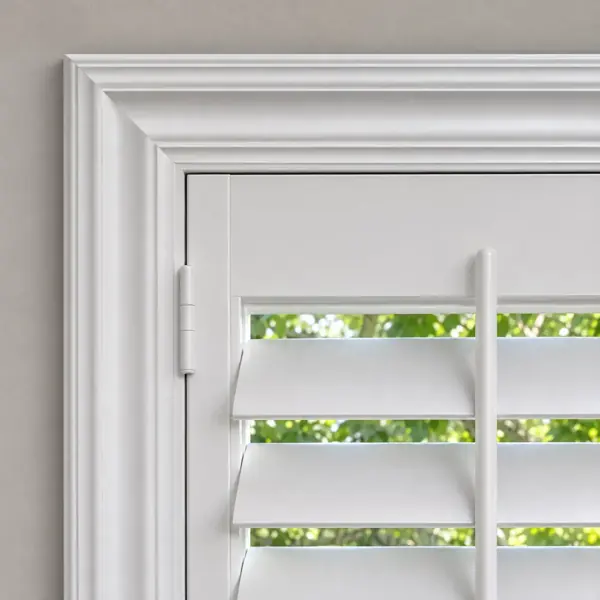 IllustrationCrown Z3 inch
The widest and most decorative, with a crown moulding profile.
Sliding doors
Two ways to cover a sliding glass door. Tall door panels get a divider rail across the middle.
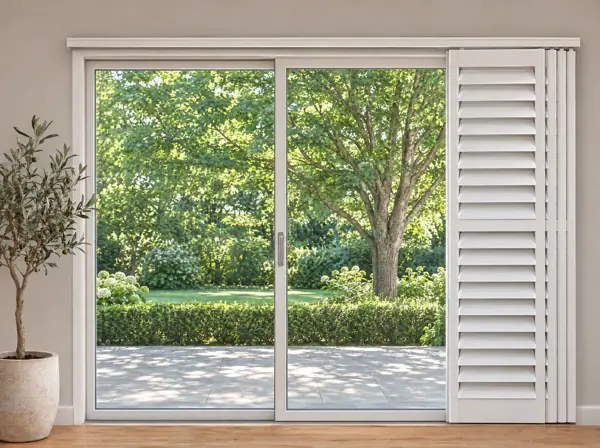
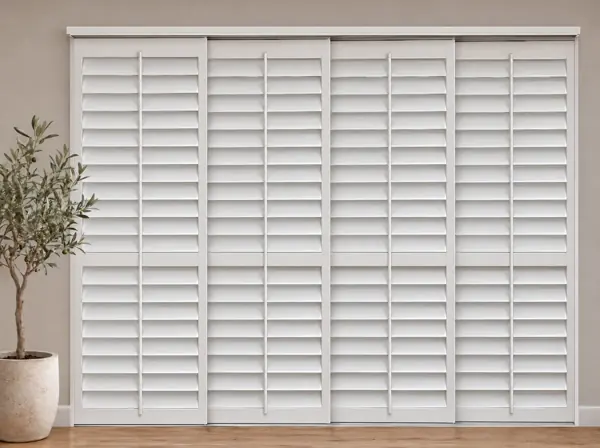 IllustrationSliding trackBest for tight spaces
Panels hang from a slim track above the door and glide side to side past each other, just like the glass. Nothing swings into the room.
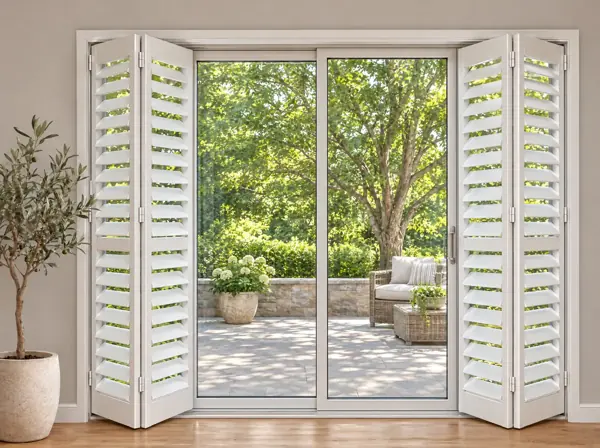 IllustrationBi-fold
Panels are hinged together in pairs and fold back to the sides like a bi-fold door. Priced at your visit.
Ready to see your price?
- We measure every window.
- You see real samples.
- Nothing's ordered until you say yes.